
Climate & Storm · 8 min read
Katrina to Ida: How Storm Outages Damage Covington HVAC Systems
By HVAC Covington LA · Published July 16, 2025 · Updated August 14, 2025
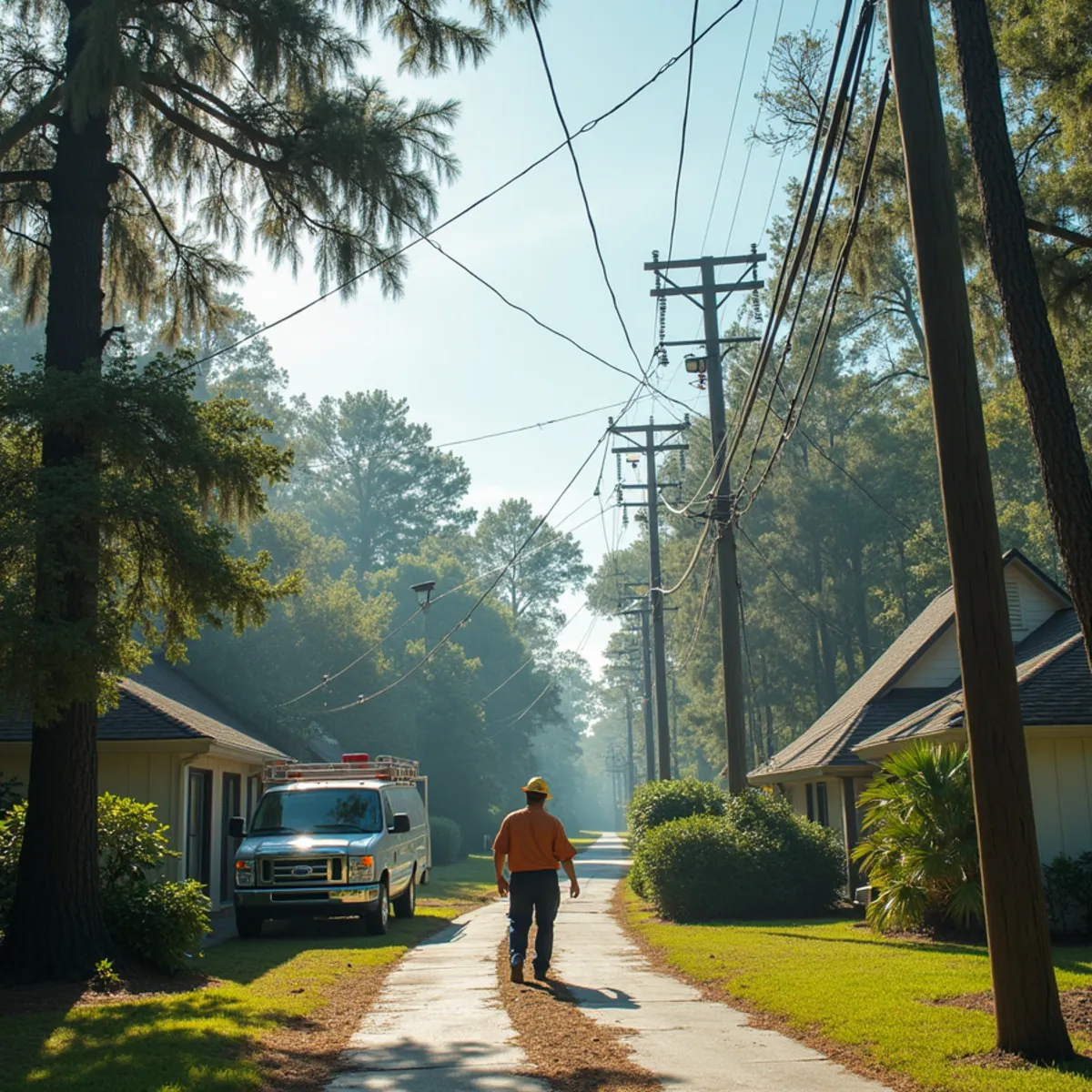
When people think about hurricane damage to their AC, they picture wind ripping the unit off its pad or a tree crushing it. That happens, but from Katrina in 2005 to Ida in 2021, we have seen that the bigger HVAC killer is often invisible: the power outage itself, and the messy, surging electricity that comes with it.
In Pearl River and across eastern St. Tammany, storms knock out power for days and then restore it in violent spikes. Those spikes, plus homeowners rushing to power everything back on at once, destroy compressors and control boards that survived the wind just fine.
Understanding how outages actually damage HVAC is the key to protecting your system, because the fixes are cheap compared to the failures they prevent.
The power surge problem
A hurricane does not just cut power, it makes the power dirty. As lines go down and come back, as the grid struggles and utility crews switch circuits, voltage swings wildly. The moment power is restored is often the most dangerous, with a hard surge racing through the lines.
Your HVAC system's compressor and electronic control board are sensitive to those swings. A single big surge can burn out a board or damage a compressor's windings instantly, and repeated brownout-and-restore cycles wear them down over days.
The bad-restart problem
The second killer is human. When the lights come back, the instinct is to flip the AC on immediately for relief in the heat. But if power is still unstable, or if the unit was sitting energized through the surge, that first restart can be the fatal moment.
Starting a compressor into low or fluctuating voltage makes it draw huge current and can seize it. This is why we tell everyone to leave the system off at the breaker during the outage and wait for steady power before restarting.
How to protect your system
Whole-home surge protection is the highest-value step. It is a modest cost against a compressor or board replacement, and it works around the clock, not just during storms.
- Install whole-home surge protection at the panel to absorb grid spikes
- Add a dedicated hard-start or surge device at the condenser for the compressor
- Shut the system off at the thermostat and breaker when power goes out
- Wait for stable, steady power before restarting after the storm
- Consider a properly sized, correctly connected generator setup evaluated by a pro
Signs your system took surge damage
After an outage, watch for a system that will not start at all, that trips its breaker immediately, that hums but does not run, or that runs but blows warm air. A burnt-electrical smell from the condenser or air handler is a red flag to leave it off.
Do not keep resetting a breaker that trips right back, that is a fire risk and a sign of a real fault. One reset to test is reasonable, repeated resets are not.
After the storm, get it checked
If your HVAC will not restart cleanly after an outage, if it behaves oddly, or if there was any burnt smell or visible damage, have it inspected before forcing it. Surge damage is often repairable when caught early, and 24/7 emergency dispatch means you are not sweating for days waiting on a diagnosis. Call (327) 210-5999 and we will get a technician out to assess storm and surge damage across St. Tammany Parish.
Why the Outage Itself Is Not the Danger, the Restoration Is
From Katrina through Ida, Covington homeowners learned that HVAC damage rarely happens while the power is out. The system is simply off and safe. The damage happens in the split second Entergy restores service, when voltage returns dirty, spikes, or sags as the grid rebalances thousands of homes coming back at once. That is when compressors try to restart under bad voltage, capacitors fail, and control boards fry. A system that survived the entire storm can die the moment the lights come back.
Prolonged outages add a second failure mode. After Ida, systems that sat off for a week in September heat came back to swollen capacitors and stiff compressor oil, then failed under the immediate hard load of cooling a hot house. The safest practice, learned across every major Northshore storm, is to switch your thermostat and outdoor disconnect off during the outage and leave them off for a while after restoration, letting the grid stabilize before you ask the compressor to work.
Storm Outage HVAC Protection Playbook
Follow this sequence around any major Northshore storm to keep an outage from becoming a compressor replacement.
- Before the storm, turn the thermostat off and pull the outdoor disconnect if evacuation is likely.
- During the outage, keep the system off rather than leaving it set to cool.
- After power returns, wait 30 to 60 minutes before restoring the disconnect and thermostat.
- Restart the system once, and stop if the breaker trips or the compressor only hums.
- Install a whole-home and dedicated HVAC surge protector before the next season.
- Inspect the outdoor unit for storm debris, bent fins, or displaced panels before restarting.
- Schedule a post-storm check if the system experienced a long outage or a rough restart.
Frequently Asked Questions
Storms make power dirty. As the grid goes down and comes back, voltage swings wildly and restoration often brings a hard surge. Those spikes can burn out a control board or damage a compressor instantly, even when the unit was never physically struck.
Services Mentioned
Areas We Serve
Related Reading
Emergency
Power Surge Killed Your Compressor After a Storm? What Covington Homeowners Should Do
Grid power rarely returns clean after a Northshore storm. Here is how to tell if a surge killed your compressor and how to protect the replacement.
Climate & Storm
Hurricane Season HVAC Prep for St. Tammany Parish: The Complete Guide
A step-by-step guide to protecting your HVAC system before, during, and after a storm in St. Tammany Parish, from surge protection to safe restart.
Seasonal Maintenance
Hurricane-Season HVAC Checklist: Straps, Surge Protectors & Shutoffs
A practical, storm-by-storm HVAC checklist for St. Tammany homeowners, covering condenser straps, surge protection, safe shutoffs, and what to do the moment power comes back.