
Emergency · 8 min read
Power Surge Killed Your Compressor After a Storm? What Covington Homeowners Should Do
By HVAC Covington LA · Published May 20, 2025 · Updated August 10, 2025
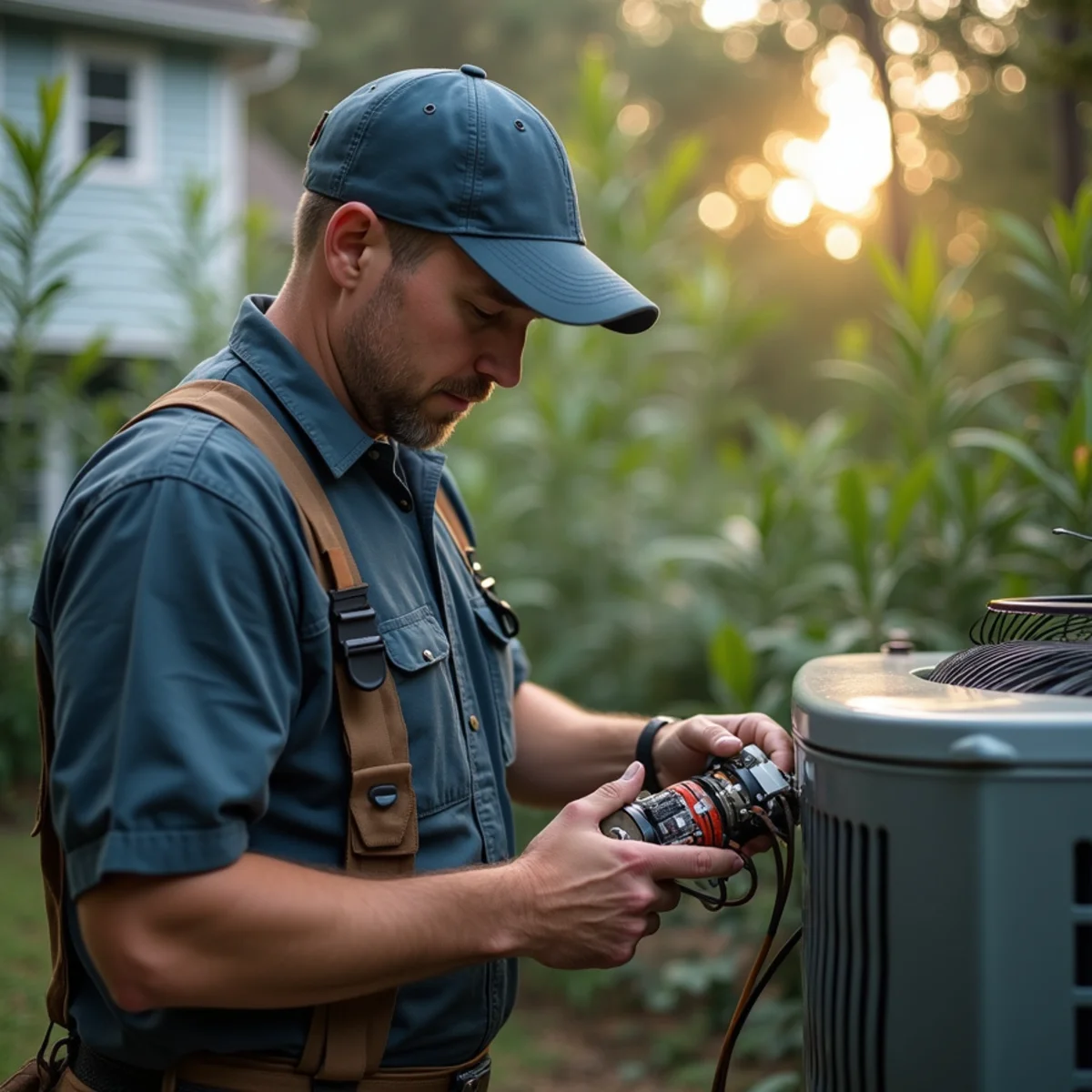
When the lights come back on after a storm rolls through the Northshore, the power that returns is rarely steady. It flickers, browns out, and spikes as the utility re-energizes lines and equipment across St. Tammany Parish. Those swings are brutal on the most expensive part of your air conditioner: the compressor.
Homeowners in Slidell and Covington often call us a day or two after a storm, puzzled that an AC which survived the wind and rain suddenly will not run. The storm did not get it — the recovery did.
Here is how to recognize surge damage, what it means for your wallet, and how to keep it from happening to the next unit.
How a power surge kills a compressor
A compressor is essentially a large motor with tight electrical tolerances. A voltage spike can weld the contactor closed, fry the run capacitor, or break down the motor windings so the compressor draws too much current and trips out.
Sometimes the damage is instant. Other times a surge weakens the windings and the compressor fails weeks later, which is why post-storm problems are not always obvious right away.
Signs a surge is the culprit
Surge damage tends to look electrical rather than mechanical. If the unit worked before the outage and misbehaves after power returns, the timing itself is a strong clue.
- The outdoor unit hums or clicks but the compressor will not start
- The breaker trips the moment the system calls for cooling
- You smell a hot, electrical odor near the condenser
- Lights flickered or other appliances also failed when power returned
- The capacitor is visibly bulged or leaking
What to do right now
Turn the system OFF at the thermostat and leave it off. Do not keep cycling the breaker to force it to run — each attempt on a shorted compressor risks more damage and can be a fire hazard.
Then document the failure for insurance. Surge and storm damage is often claimable, and photos plus the model and serial numbers strengthen the case.
- Switch the thermostat and the disconnect OFF
- Reset a tripped breaker only once — if it trips again, stop
- Photograph the unit and any burnt or bulged components
- Note the storm date and when power was restored
Repair or replace?
Whether a surge-damaged system is worth repairing depends on what failed and how old the unit is. A blown capacitor or contactor is an affordable fix. A shorted compressor is a major expense, and on an aging system it often tips the math toward replacement — especially given the SEER2 efficiency gains available on a new install.
A technician can test the compressor windings and capacitor to tell you exactly what died and give you honest numbers on both paths.
Protect the next compressor
The cheapest compressor is the one you never have to replace. Whole-home surge protection at the panel plus a hard-start and surge device at the condenser dramatically reduces the odds that the next storm recovery takes out your equipment.
Given how often Northshore grids bounce after weather, this is one of the highest-value upgrades we install.
Call before you gamble on a restart
If your AC quit after the power came back and shows any electrical symptoms, have it tested before you keep trying to run it. A quick diagnostic protects the compressor that is still salvageable and gives you documentation for your claim.
HVAC Covington LA offers 24/7 emergency dispatch and surge protection installation across St. Tammany Parish. Call (327) 210-5999 and we will diagnose the failure and help you protect whatever comes next.
How a Storm Surge Actually Kills a Compressor
When Entergy power flickers back on after a Northshore storm, it rarely returns as a clean 240 volts. It comes back as a spike, sometimes a brief over-voltage that hammers the compressor's start windings, and sometimes a brownout that forces the motor to draw locked-rotor amperage while trying to start under low voltage. Both scenarios cook insulation on the windings. The compressor may survive the first hit and fail weeks later, which is why homeowners often do not connect the failure to the storm that caused it.
The control board and capacitors are the first casualties, and they are the cheap ones. The expensive damage is a shorted or grounded compressor, which shows up as a system that trips the breaker instantly or hums without starting. A technician confirms this with a megohmmeter reading the windings to ground. If the winding is grounded, no capacitor or hard-start kit will revive it, and you are looking at a compressor or full condenser replacement.
First Moves After a Storm Restores Power
Before you flip the thermostat back to cool, walk through these steps to avoid finishing off a compressor the surge already weakened.
- Leave the thermostat off for at least 30 minutes after power returns to let the grid voltage stabilize.
- Check the outdoor disconnect and breaker before restarting, and reset only once.
- Listen at startup for humming without the fan spinning, which signals a seized or grounded compressor, then shut it down.
- Feel for a hot, oily smell at the condenser, a sign of burned windings.
- Note whether the breaker trips instantly on restart and stop retrying if it does.
- Photograph the outdoor unit and note the storm date for your insurance claim.
- Call for a diagnostic before running the system hard, since a weakened compressor fails faster under load.
Frequently Asked Questions
Yes. A voltage spike can weld the contactor, blow the capacitor, or damage the compressor windings so it can no longer start. Storm recovery surges are a common cause of compressor failure on the Northshore.
Services Mentioned
Areas We Serve
Related Reading
Climate & Storm
Katrina to Ida: How Storm Outages Damage Covington HVAC Systems
From Katrina to Ida, it is often the power outage, not the wind, that kills Covington HVAC systems. Here is how outages cause damage and how to prevent it.
Emergency
Hurricane Knocked Out Your AC? A Covington Post-Storm HVAC Checklist
After a hurricane rolls through St. Tammany Parish, your AC needs a careful once-over before you power it back up. Here is the safe order of operations.
Seasonal Maintenance
Hurricane-Season HVAC Checklist: Straps, Surge Protectors & Shutoffs
A practical, storm-by-storm HVAC checklist for St. Tammany homeowners, covering condenser straps, surge protection, safe shutoffs, and what to do the moment power comes back.