
Seasonal Maintenance · 9 min read
Hurricane-Season HVAC Checklist: Straps, Surge Protectors & Shutoffs
By HVAC Covington LA · Published May 22, 2025 · Updated August 12, 2025
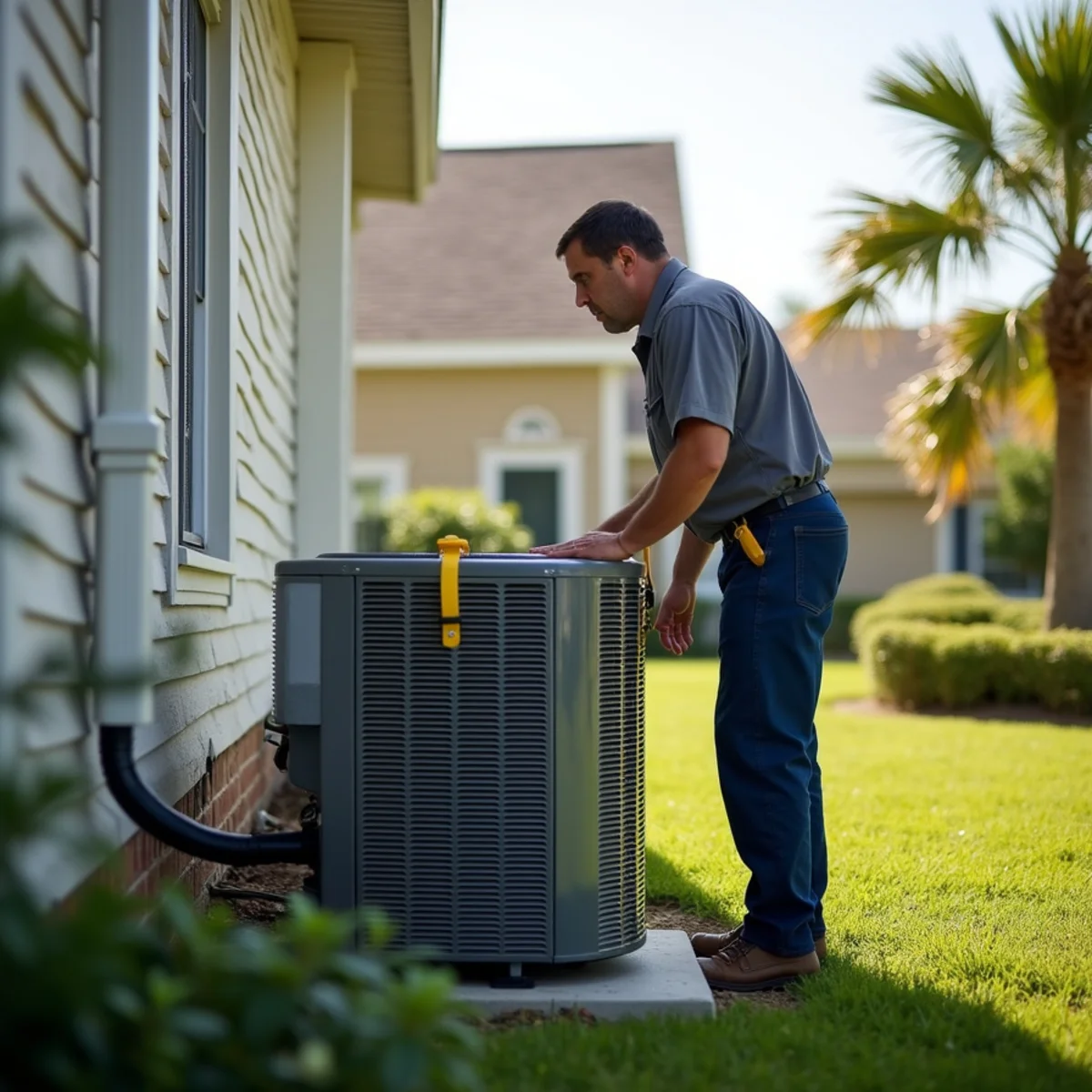
On the Northshore, hurricane season is not an abstraction. Anyone who lived through Ida remembers the weeks without power and the neighbors whose condensers walked off their pads or drowned in floodwater. Your HVAC system is one of the most expensive things bolted to your house, and it is also one of the most exposed.
The good news is that most storm damage to air conditioners is preventable with a short list of steps done before the cone ever points at Louisiana. The rest comes down to shutting down safely and not rushing a wet or surged system back into service.
Here is the checklist we walk St. Tammany homeowners through every June, from Mandeville to Covington, so your system survives the storm and comes back running.
Before the season: strap and anchor the condenser
High wind and the pressure changes around a moving storm can lift or shift an outdoor unit. Hurricane straps that anchor the condenser cabinet to its pad or a secured slab keep it in place, and they are a small investment compared to a replacement.
While you are at it, confirm the pad itself is stable. Our high water table and heavy rain can undermine a pad over time, leaving the unit tilted, which stresses refrigerant lines and drainage.
- Install rated hurricane tie-down straps on the condenser
- Confirm the pad is level and not sinking into saturated soil
- Trim branches and secure loose yard items that could become projectiles
- Photograph the unit and note the model and serial number for insurance
Surge protection: the damage you cannot see coming
The biggest post-storm HVAC killer on the Northshore is not wind, it is electricity. When the grid comes back after an outage, it rarely returns clean. Voltage spikes and brownouts fry compressors, control boards, and capacitors, and those failures often show up days later.
A whole-home surge protector at the panel, plus a dedicated unit at the condenser, shields your equipment from that dirty power. Compressor replacements run into the thousands, so surge protection is one of the highest-value upgrades you can make before a storm.
As the storm approaches: shut down the right way
If flooding or a direct hit is likely, powering the system down protects it. A running compressor hit by a surge or ingesting water is far more likely to be totaled than one that was safely off.
- Set the thermostat to off, then switch off the AC breaker at the panel
- Flip the outdoor disconnect box next to the condenser if you have one
- Cover the condenser only if wind is not a factor, and never run it while covered
- If flooding is expected, know that a submerged unit should not be restarted until inspected
After the storm: do not just flip it back on
Once power is restored, resist the urge to immediately crank the AC. Look first. If the condenser sat in floodwater, if you see a shifted unit, damaged lines, or debris packed into the coil, or if the outdoor disconnect looks scorched, leave it off and call for an inspection.
Restarting a water-damaged or storm-stressed system can turn a repairable problem into a full replacement. A short diagnostic is cheaper than a compressor, and it tells you whether the system is safe to run.
Document everything for insurance
Louisiana homeowners deal with wind and flood claims more than most. Before-and-after photos, your equipment's age, and a technician's written assessment all strengthen a claim. Keep the model and serial numbers somewhere that survives a power outage, like a photo in your phone backed up to the cloud.
Get your system storm-ready
The window to prepare is the calm before the season, not the 48 hours before landfall when every crew in the parish is booked. If you need straps installed, surge protection added, or a pre-season inspection, call HVAC Covington LA at (327) 210-5999. We will get your system anchored and protected so a Gulf storm does not cost you your air conditioner.
Anchoring and Sealing Beyond the Basic Checklist
Most hurricane HVAC advice stops at surge protectors, but on the Northshore the physical anchoring of your condenser matters just as much. In sustained tropical winds, an un-strapped condenser can shift on its pad, straining refrigerant line connections until they leak, or in extreme gusts tip over entirely. Hurricane tie-down straps that anchor the unit to its pad or a concrete footing are inexpensive and prevent a repair far larger than the strap ever cost. Combine that with a pad that is level and properly bedded so it does not undermine in saturated soil.
The second overlooked step is sealing and shutoff strategy. Where refrigerant and electrical lines penetrate the wall, weathered sealant lets wind-driven rain into the wall cavity and the air handler space. Fresh sealant before the season keeps that water out. Knowing exactly where your outdoor disconnect and indoor shutoffs are, and testing that they operate, means you can safely de-energize the system before the storm rather than fumbling in the dark when it counts.
Pre-Storm HVAC Checklist for Covington Homeowners
Complete this checklist when a storm enters the Gulf, not when it is a day out and supplies are gone.
- Install or verify hurricane tie-down straps securing the condenser to its pad or footing.
- Confirm whole-home and HVAC-dedicated surge protectors are in place and functioning.
- Locate and test the outdoor disconnect and indoor shutoffs so you can de-energize quickly.
- Reseal refrigerant line and electrical penetrations where sealant is cracked or missing.
- Clear the area around the condenser of loose furniture, limbs, and debris that could become projectiles.
- Elevate or plan to elevate equipment if your home sits in a flood-prone zone.
- Photograph the system and note serial numbers for insurance before the storm arrives.
- Plan to switch the system off during the outage and restart slowly after power returns.
Frequently Asked Questions
Rated tie-down straps anchored to a solid pad significantly reduce the chance of the unit shifting or lifting in high wind. They will not save a unit from deep floodwater, but for wind events they are inexpensive, effective protection.
Services Mentioned
Areas We Serve
Related Reading
Climate & Storm
Hurricane Season HVAC Prep for St. Tammany Parish: The Complete Guide
A step-by-step guide to protecting your HVAC system before, during, and after a storm in St. Tammany Parish, from surge protection to safe restart.
Emergency
Power Surge Killed Your Compressor After a Storm? What Covington Homeowners Should Do
Grid power rarely returns clean after a Northshore storm. Here is how to tell if a surge killed your compressor and how to protect the replacement.
Climate & Storm
Katrina to Ida: How Storm Outages Damage Covington HVAC Systems
From Katrina to Ida, it is often the power outage, not the wind, that kills Covington HVAC systems. Here is how outages cause damage and how to prevent it.