
Emergency · 9 min read
Hurricane Knocked Out Your AC? A Covington Post-Storm HVAC Checklist
By HVAC Covington LA · Published June 12, 2025 · Updated August 14, 2025
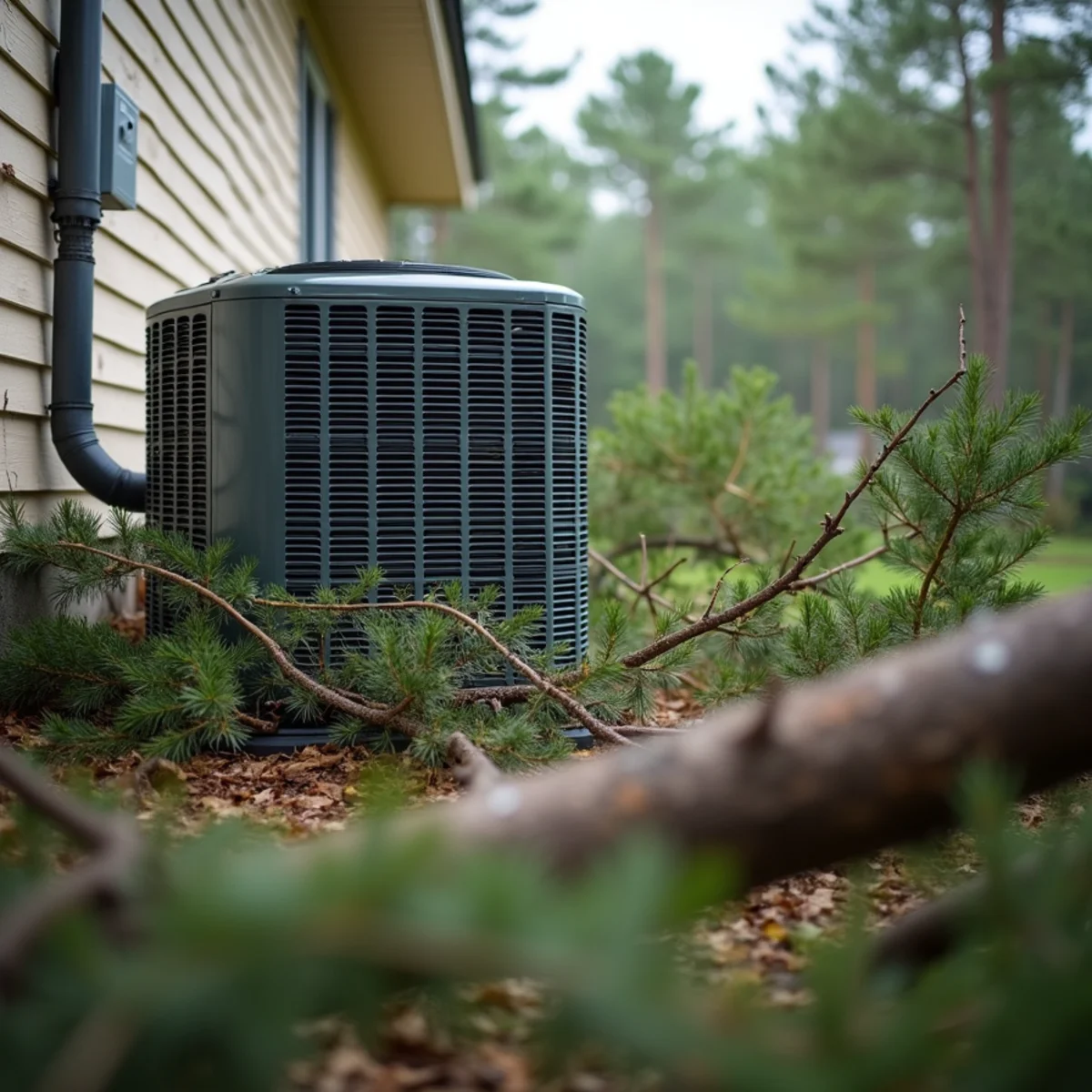
When a named storm tracks up from the Gulf and over St. Tammany Parish, your air conditioner takes the hit from three directions at once: wind-driven debris, storm surge or rising river water, and the power surges that ride in on the grid when the lines come back up. By the time the sky clears over Covington, a lot of homeowners just want to flip the thermostat and get cool air moving again.
That is exactly the moment to slow down. Powering up a compressor that took on water, lost refrigerant, or absorbed a surge can turn a repairable problem into a full replacement. The good news is that a careful, ordered inspection takes only a few minutes and tells you a lot.
Here is the checklist we walk Covington families through after every big blow, in the order that keeps you safe and protects the equipment you already own.
First, make it safe before you touch anything
Standing water and electricity do not mix, and a hurricane leaves plenty of both around a Northshore home. Before you go near the outdoor condenser or the indoor air handler, look for downed lines, the smell of burning, or water pooled around any electrical panel.
If you see or smell any of those, stay back and call the utility or 911. No AC repair is worth a shock hazard.
- Do not wade through standing water to reach the outdoor unit
- If anything is sparking, smoking, or smells burnt, leave it off and call 911
- Do not repeatedly flip a breaker that keeps tripping — that is the system telling you something is wrong
- Keep the thermostat OFF until the equipment has been checked
Inspect the outdoor condenser
The condenser sits out in the yard and catches the worst of the wind. Walk around it and look for the obvious first: pine limbs jammed in the fan grille, the whole cabinet shoved off its pad, or bent fins and a crushed housing from flying debris.
Then look lower. If the waterline on the cabinet or the surrounding fence shows the unit sat in floodwater, the contactor, capacitor, and wiring may be compromised even if the outside looks fine. Note the height of any waterline for your insurance claim.
Check the indoor air handler and ductwork
Covington homes often keep the air handler in the attic or a closet, and attics are where wind-driven rain finds its way in. Look for water stains on the ceiling below the unit, damp insulation on the ducts, or standing water in the drain pan.
A soaked air handler is not a dry-it-out-and-hope situation. The EPA guidance for wet building materials is a 24 to 48 hour drying window before mold takes hold, and a waterlogged blower motor or circuit board needs a professional evaluation before it sees power again.
Watch for surge damage when the power returns
Grid power on the Northshore rarely comes back clean after a hurricane. It flickers, browns out, and surges, and those swings are hard on a compressor and control board. If your AC ran fine before the storm but hums, trips the breaker, or blows warm air after power is restored, suspect an electrical fault, not a refrigerant issue.
This is also the argument for whole-home and equipment-level surge protection before the next season — it is far cheaper than a compressor.
Document everything for your claim
Before any repair, photograph the unit from several angles, capture the waterline height, and write down the model and serial numbers. Storm and flood damage is handled very differently from normal wear, and your paper trail is what gets the claim approved.
Our technicians provide written damage assessments that homeowners across Mandeville and Covington use to support hurricane and flood claims.
When to call a pro — and our promise
If the unit sat in water, took visible debris, or behaves differently after the power returns, have it inspected before you run it. A short diagnostic is far cheaper than the compressor a rushed restart can kill.
We offer same-day service across St. Tammany Parish and 24/7 emergency dispatch, so you are not waiting days in the heat. Call HVAC Covington LA at (327) 210-5999 and we will get a technician to your post-storm inspection fast.
Why Won't My AC Restart After the Power Comes Back On?
After a hurricane rolls through St. Tammany Parish, the biggest cause of a dead condenser isn't the wind, it's the way power returns. Entergy restoration often brings the grid back in ragged surges, and those voltage spikes fry contactors, capacitors, and control boards on units that were left switched on. The compressor also tries to restart against high internal head pressure the moment power hits, and without a hard-start kit or a five-minute anti-short-cycle delay, that inrush can lock the motor. That's why we tell every Covington homeowner to flip the outdoor disconnect and the thermostat to OFF before the storm and leave them off for a few hours after restoration settles.
The other silent killer is water intrusion into the electrical whip and the low-voltage wiring. Even when the condenser looks untouched, floodwater or wind-driven rain wicks into the disconnect box and corrodes terminals within days in our humidity. If your unit hums but won't spin, or trips the breaker instantly, stop resetting it, repeated attempts stack heat damage onto an already-compromised compressor and turn a $200 capacitor job into a replacement.
Post-Storm AC Restart Checklist for Covington Homes
Work through these steps before you demand the system run, and never skip the visual inspection just because the lights came back on.
- Confirm the outdoor disconnect is dry inside, corrosion or standing water means call before powering up
- Clear debris, pine straw, and leaves from the condenser coil and fan grille
- Check the concrete pad, a unit that shifted or tilted may have kinked the refrigerant line set
- Look for a floodwater line on the cabinet, submerged compressors and boards need professional evaluation, not a reset
- Reset the thermostat to cool, set 4-5 degrees below room temp, and listen for the compressor to engage within a minute
- If the breaker trips or the fan won't turn, leave it off and call (327) 210-5999
- Replace the air filter, storm dust and generator exhaust clog filters fast
Frequently Asked Questions
Not until it has been checked. If the outdoor unit took on floodwater, absorbed a power surge, or has debris in it, running it can destroy the compressor. Inspect it first and, when in doubt, have a technician evaluate it before you restore power to the system.
Services Mentioned
Areas We Serve
Related Reading
Emergency
Flooded Air Handler After the Bogue Falaya Rises: Immediate Steps
When the Bogue Falaya spills over and water reaches your air handler, the first 48 hours decide whether you are drying it out or replacing it. Here is what to do.
Emergency
Power Surge Killed Your Compressor After a Storm? What Covington Homeowners Should Do
Grid power rarely returns clean after a Northshore storm. Here is how to tell if a surge killed your compressor and how to protect the replacement.
Climate & Storm
Hurricane Season HVAC Prep for St. Tammany Parish: The Complete Guide
A step-by-step guide to protecting your HVAC system before, during, and after a storm in St. Tammany Parish, from surge protection to safe restart.