
Emergency · 9 min read
Flooded Air Handler After the Bogue Falaya Rises: Immediate Steps
By HVAC Covington LA · Published April 24, 2025 · Updated August 8, 2025
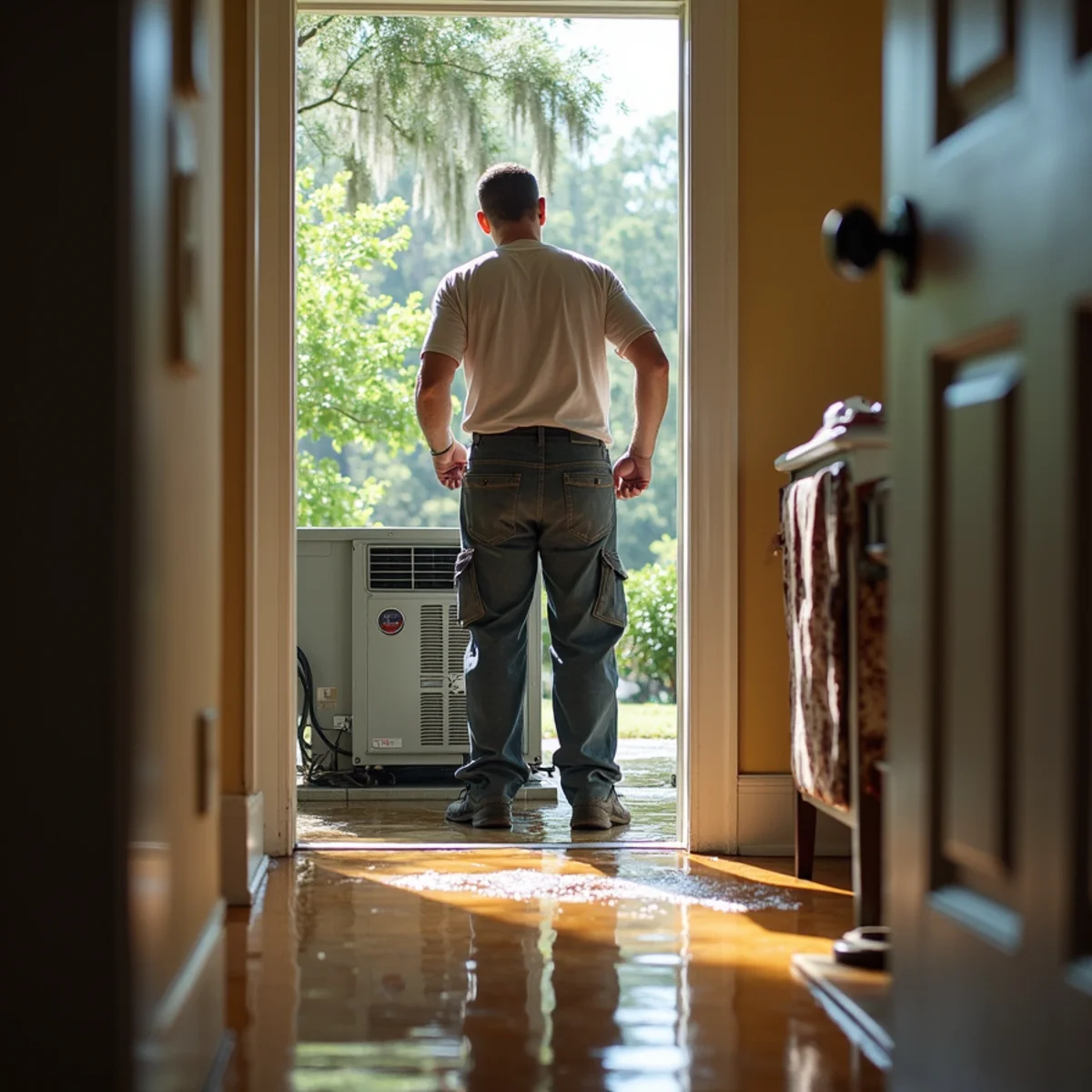
Covington sits between the Bogue Falaya and the Tchefuncte, and anyone who has lived here through a heavy rain season knows how fast those rivers can come up. When the water reaches the house, low-mounted air handlers, closet units, and anything on a slab are the first HVAC casualties.
A flooded air handler is not like a flooded fan you can dry off and reuse. It is a box full of electrical controls, a blower motor, and a coil, and once it takes on river water — which is never clean — the clock starts on both electrical safety and mold.
Here are the immediate steps that keep you safe and give your equipment its best shot, in the order that matters.
Cut the power before you go near it
Floodwater around an energized air handler is a serious shock hazard. Do not reach in to check the unit while it may still have power.
If you can safely reach the breaker without standing in water, switch off the circuit to the air handler and the outdoor unit. If the panel itself is wet or you would have to wade to reach it, stay back and call an electrician or the utility.
- Do not touch a wet air handler that may still be energized
- Kill the breaker only if you can reach it without standing in water
- Never step into standing water near electrical equipment
- If in doubt, wait for a professional — it is not worth the risk
Do not turn it back on to test it
The instinct after the water drops is to flip the system on and see if it still works. Resist it. River and flood water carries silt, sewage, and contaminants that get into the blower motor, the control board, and the coil.
Energizing a wet system can short the controls, damage the motor, and put contaminated moisture through your entire duct network. Leave it off until a technician has evaluated it.
Mind the EPA drying window
The EPA guidance for wet building materials is clear: you have roughly 24 to 48 hours to dry things out before mold takes hold. In Covington's humidity, that window can feel even shorter.
Once mold is in the air handler and ducts, it does not just stay there — the system blows spores through every room. Getting air moving, water out, and materials dried quickly is the difference between a cleanup and a gut.
- Start extracting standing water immediately
- Run fans and, if you have one, a portable dehumidifier
- Pull wet insulation away from the unit so it can dry or be discarded
- Photograph everything first for your flood claim
What can be saved and what cannot
Some components survive a flood and some never should. A coil and sheet-metal cabinet can often be cleaned and dried. But blower motors, control boards, contactors, and any wiring that sat in contaminated water are typically condemned — drying them out and hoping is a callback and a safety risk.
A technician will tell you honestly which parts are salvageable and whether the unit crosses the line into replacement territory.
Document for your flood claim
Flood damage is handled under flood coverage, not a standard homeowners policy, and the documentation requirements are strict. Before any work, photograph the waterline on the unit and walls, capture the model and serial numbers, and keep a record of the flood date.
Our written assessments are built to support the flood claims our Covington and Madisonville customers file after high water.
Call for a same-day flood evaluation
A flooded air handler is a race against mold and a genuine electrical hazard. The right move is a fast, professional evaluation before you attempt any restart. We provide 24/7 emergency dispatch and same-day service across St. Tammany Parish for exactly these calls.
Call HVAC Covington LA at (327) 210-5999 and we will get a technician to your flooded unit quickly, keep you safe, and give you honest guidance on repair versus replacement.
What Actually Happens Inside a Flooded Air Handler?
When the Bogue Falaya or Tchefuncte backs up into a home and reaches the air handler, whether it sits in a closet, attic, or on a slab, the damage runs deeper than the water line suggests. Floodwater in our area carries silt, bacteria, and sometimes sewage, and it saturates the blower motor bearings, the control board, and the sealed insulation lining the cabinet. That fiberglass insulation acts like a sponge, holding contaminated moisture against metal for weeks and breeding mold that the blower then pushes through every room the moment you restart the system. You cannot dry it out with a fan and call it clean.
The electrical side is where flooded air handlers become dangerous. The blower motor, transformer, and integrated furnace control get submerged in silty water, and even after they appear dry, corrosion creeps across the circuit traces and motor windings. Energizing a wet board can short it instantly or, worse, create a slow fault that fails weeks later. In St. Tammany's flood-prone neighborhoods we treat any submerged air handler as a mandatory teardown inspection, not a wait-and-see.
Immediate Steps After Your Air Handler Floods
Do these in order the moment it's safe to enter the home, and keep the system powered down until a technician clears it.
- Shut off power at the breaker and the unit disconnect before touching anything, wet electrical is a shock hazard
- Do not run the blower to dry it, that spreads mold spores and contaminated debris through the ductwork
- Note and photograph the water line on the cabinet for your flood insurance claim
- Pull and discard the saturated air filter immediately
- Open the cabinet to let the internal components breathe, but leave electrical connections alone
- Check whether floodwater also entered the return duct and supply plenum, they trap water too
- Call (327) 210-5999 for a contamination and safety assessment before any restart
Frequently Asked Questions
It depends on what got wet. Coils and cabinets can often be cleaned, but blower motors, control boards, and wiring that sat in contaminated floodwater are usually condemned for safety. A technician will tell you which components are salvageable.
Services Mentioned
Areas We Serve
Related Reading
Climate & Storm
What the March 2016 Bogue Falaya Flood Taught Covington About HVAC Elevation
The March 2016 Bogue Falaya flood put water in homes that had never flooded before. Its clearest HVAC lesson: elevation is not optional in Covington.
Cost & Financing
Does Flood Insurance Cover HVAC Equipment in Louisiana?
Flood and homeowners policies treat HVAC damage very differently in Louisiana. Here is what flood insurance typically covers and how to document a claim.
Emergency
Hurricane Knocked Out Your AC? A Covington Post-Storm HVAC Checklist
After a hurricane rolls through St. Tammany Parish, your AC needs a careful once-over before you power it back up. Here is the safe order of operations.