
Climate & Storm · 8 min read
What the March 2016 Bogue Falaya Flood Taught Covington About HVAC Elevation
By HVAC Covington LA · Published March 11, 2025 · Updated June 28, 2025
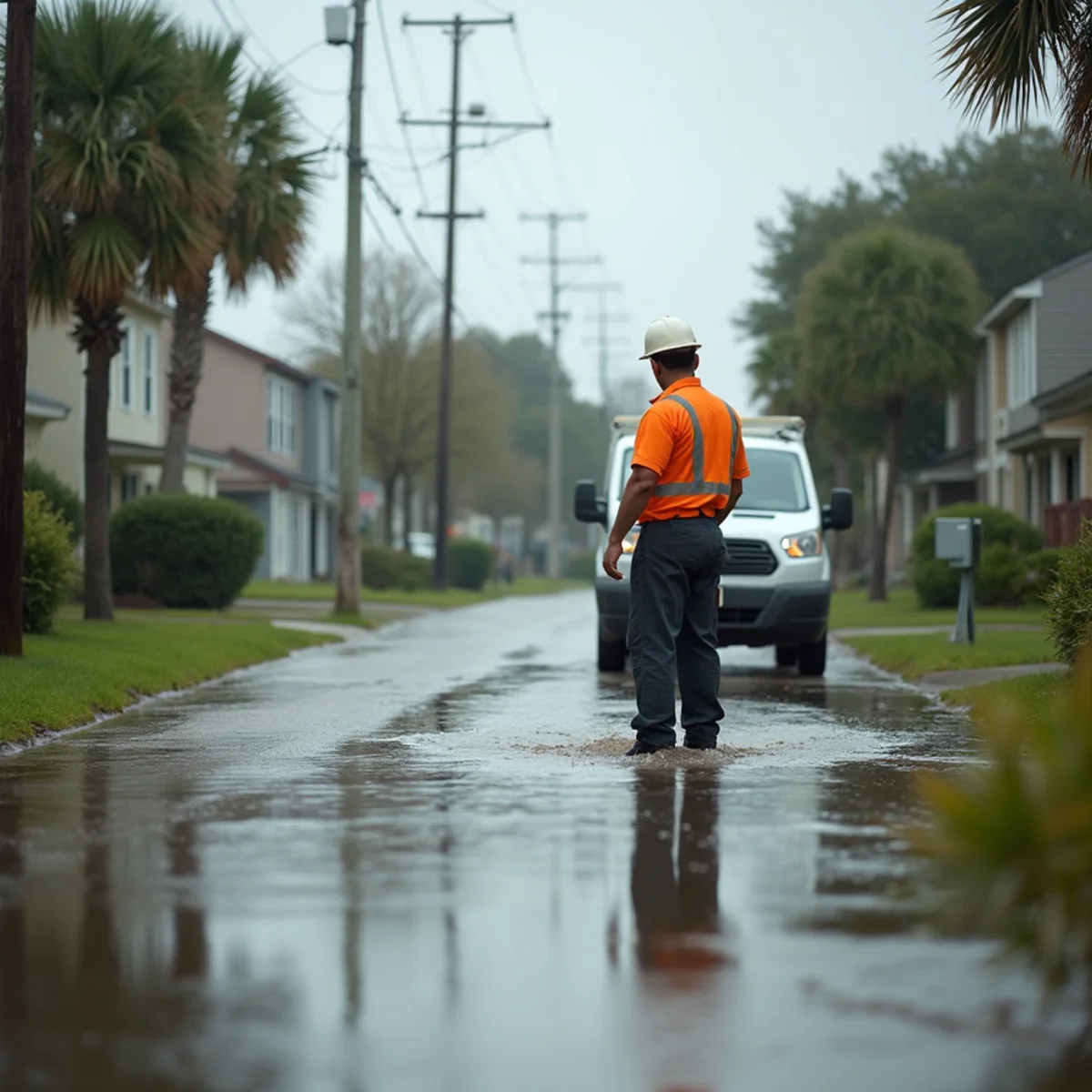
In March 2016, days of relentless rain sent the Bogue Falaya and Tchefuncte rivers over their banks, and water pushed into Covington homes and neighborhoods that residents swore had never flooded. Around St. Benedict and along the river corridors, families watched water rise into garages, crawlspaces, and living areas.
For HVAC, the lesson was blunt and expensive. Outdoor condensers sat in floodwater. Air handlers in low garages and crawlspaces were submerged. And a lot of that equipment could not simply be dried off and switched back on.
Almost a decade later, that flood still shapes how we advise Covington homeowners on where their equipment lives. Here is what it taught us and what to do about it.
Why floodwater destroys HVAC equipment
An air conditioner is full of electrical controls, motors, and insulation, none of which tolerate submersion. Floodwater on the Northshore is not clean, either. It carries mud, sewage, and debris that lodge in coils, contactors, and blower assemblies. Once that grit and contamination is inside, a rinse does not restore the equipment to safe operation.
Powering up a flood-soaked system risks short circuits and fire, which is why submerged units have to be evaluated before any attempt to run them, and often replaced rather than repaired.
The elevation lesson
The homes that fared best had their equipment up off the ground. Elevated condenser pads and air handlers raised above the flood line kept working while ground-level units were lost. That is the single clearest takeaway from 2016: in a river town, elevation is protection.
FEMA and local floodplain rules increasingly push for mechanical equipment to sit at or above the base flood elevation, and doing so protects both your comfort and your ability to insure and rebuild.
What elevation looks like in practice
Not every home can do all of this, but even partial elevation of the most vulnerable components dramatically cuts your flood loss. It is worth planning at replacement time rather than after the next flood.
- Raising the outdoor condenser on a taller, engineered pad or wall-mount bracket
- Relocating an air handler out of a flood-prone crawlspace to a higher interior space
- Elevating ductwork or rerouting it above the flood line where feasible
- Sealing and protecting line sets and electrical whips against water intrusion
Ductwork after a flood
Ducts that sat in floodwater are their own problem. Insulation and duct board soak up contaminated water and stay wet, and the EPA guidance is to dry or remove water-damaged porous materials within 24 to 48 hours to prevent mold. Flooded flex duct and insulated duct board usually need replacement, not just cleaning.
This is why a post-flood HVAC assessment looks at the whole system, condenser, air handler, and ducts, not just whether the outdoor unit turns on.
Plan before the water comes
The families who called us before hurricane season, not during the next flood, are the ones who elevated in time. If your Covington home is near the Bogue Falaya, the Tchefuncte, or in any low-lying area, ask about elevating your equipment and protecting your ductwork now. For a flood-readiness assessment or storm damage evaluation, call (327) 210-5999, and we will help you protect the system before the river decides for you.
What the 2016 Flood Revealed About Equipment Placement
When the Bogue Falaya and Tchefuncte overtopped their banks in March 2016, thousands of Covington homes that had never flooded took water, and the HVAC lesson was brutal and clear: ground-level condensers and slab-mounted air handlers were destroyed en masse. Units that sat six inches off the ground fared no better than those on the slab, because the water rose two to four feet in many neighborhoods. The homes that recovered fastest were those whose equipment had already been elevated on tall stands or moved to raised platforms.
The failures were not always immediate. Some systems that got splashed but not submerged ran for weeks, then failed as silt-contaminated bearings and corroded contactors gave out. That delayed failure pattern is why post-flood inspections matter even when a unit seems to have survived. The 2016 event reset how experienced Covington technicians think about placement: in a flood-prone parish, elevation is not an upgrade, it is baseline resilience.
Flood-Resilient HVAC Placement Lessons for Covington Homes
Apply what 2016 taught to any repair, replacement, or new install if your home sits in or near a flood-prone Covington neighborhood.
- Elevate the outdoor condenser on a stand set above your base flood elevation, not just a few inches.
- Move slab-mounted air handlers to an elevated platform, attic, or raised interior location where feasible.
- Route refrigerant lines and electrical whips so connections sit above expected flood height.
- Install the condensate and disconnect components above grade to avoid submersion.
- Keep equipment documentation and elevation photos current for faster insurance claims.
- After any flood contact, get a professional inspection even if the unit still runs.
- Budget elevation into your next replacement rather than reinstalling at the old vulnerable height.
Frequently Asked Questions
Rarely safely. Floodwater carries mud, sewage, and grit into electrical controls, motors, and insulation, and it cannot simply be rinsed out. Submerged units must be professionally evaluated and are often replaced rather than repaired to avoid short circuits and fire.
Services Mentioned
Areas We Serve
Related Reading
Emergency
Flooded Air Handler After the Bogue Falaya Rises: Immediate Steps
When the Bogue Falaya spills over and water reaches your air handler, the first 48 hours decide whether you are drying it out or replacing it. Here is what to do.
Cost & Financing
Does Flood Insurance Cover HVAC Equipment in Louisiana?
Flood and homeowners policies treat HVAC damage very differently in Louisiana. Here is what flood insurance typically covers and how to document a claim.
Climate & Storm
Hurricane Season HVAC Prep for St. Tammany Parish: The Complete Guide
A step-by-step guide to protecting your HVAC system before, during, and after a storm in St. Tammany Parish, from surge protection to safe restart.