
Troubleshooting · 8 min read
Why Condenser Coils Corrode Faster Near Lake Pontchartrain
By HVAC Covington LA · Published May 6, 2025 · Updated July 18, 2025
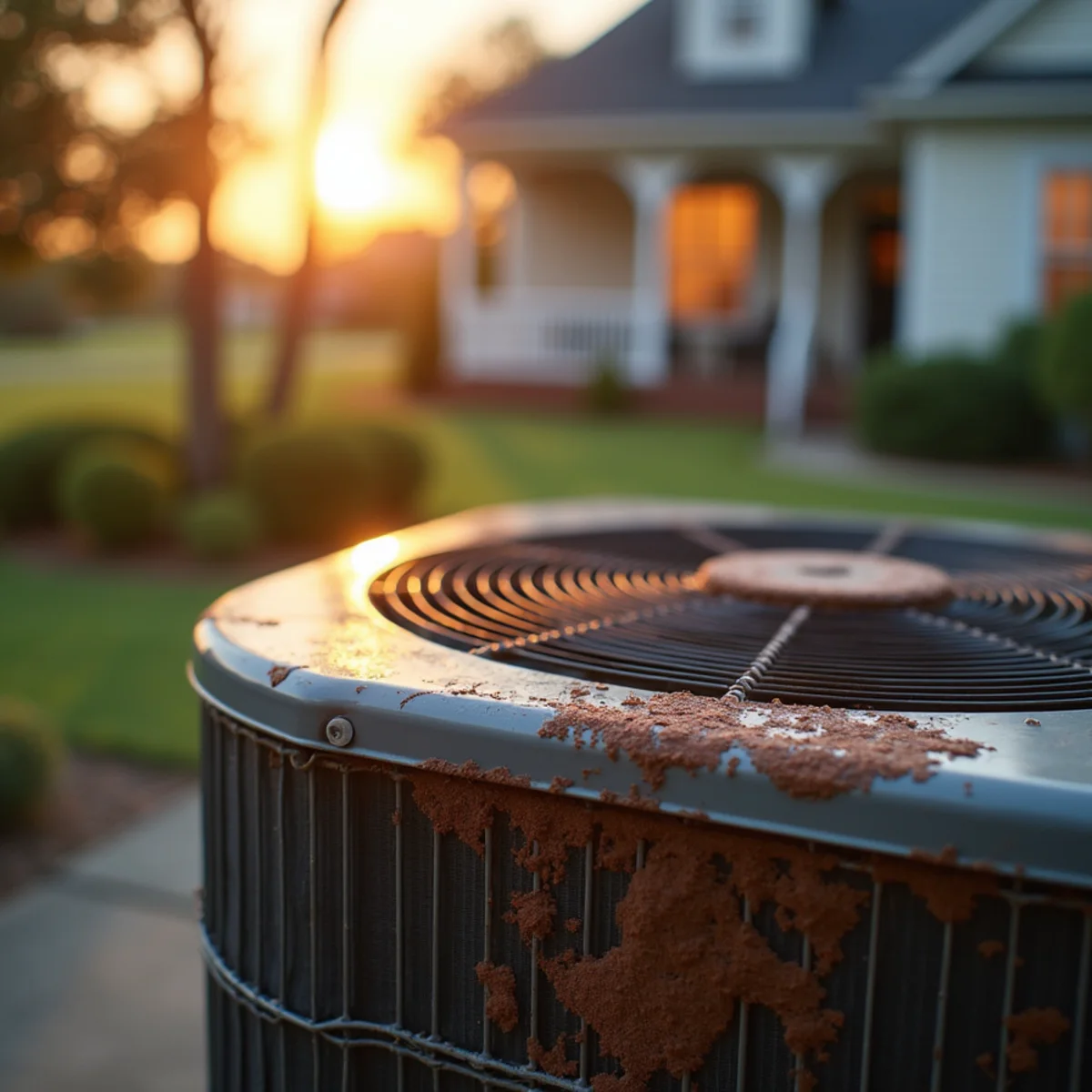
If you live in Eden Isle or anywhere along the south edge of St. Tammany Parish near Lake Pontchartrain, your outdoor AC unit is aging faster than the same unit would in Folsom or Bush. The reason is invisible: the air carries moisture and dissolved salts off the lake, and that mix is brutal on the thin metal fins and coils of a condenser.
We see it constantly on service calls near the water. Coils that should last 12 to 15 years show fin rot, white powdery buildup, and refrigerant leaks at half that age. Corrosion does not just look bad, it steals cooling capacity and eventually punches holes that leak refrigerant.
Here is what is actually happening to the metal, how to spot early corrosion, and the steps that meaningfully extend coil life near the lake.
What the lake air does to your coil
A condenser coil is a maze of copper tubing and aluminum fins designed to shed heat. Salt-laden, humid air settles on that metal and accelerates galvanic corrosion, especially where copper and aluminum meet. The fins thin out, the bond between tube and fin degrades, and eventually a pinhole forms in the tubing that lets refrigerant escape.
Because our air is humid nearly year round, the metal rarely gets to dry out, so the reaction just keeps working. This is why coastal and lakeside units fail earlier than inland ones.
Early warning signs of coil corrosion
- White or gray powdery deposits on the aluminum fins
- Fins that crumble or flake when lightly touched
- Rust streaks on the cabinet and coil guard
- Gradually weaker cooling as fin damage reduces heat transfer
- A refrigerant leak traced to the outdoor coil rather than a fitting
Rinsing is your cheapest defense
The single most effective habit near the lake is regularly rinsing the outdoor coil with clean water. Flushing away accumulated salt and grime before it can sit and react slows corrosion dramatically. With the power off, use a gentle stream from the inside out to push debris back the way it came, and never a pressure washer, which bends and destroys the fins.
Doing this every few weeks in the humid season, plus after any storm that blows salt spray inland, makes a real difference over the life of the unit.
Coatings and coil choices at replacement
When it is time to replace a lakeside system, coil construction matters. Factory-applied anti-corrosion coatings and coils built for coastal environments cost a bit more up front and buy years of extra life where the air is salty. All-aluminum microchannel designs and epoxy-coated coils are both worth asking about.
We steer customers near the water toward these options because a standard builder-grade coil simply does not last the same number of years down here.
Placement and maintenance
Where practical, siting the condenser away from the most direct salt-air exposure and keeping it clear of shrubs that trap moisture helps. A professional spring tune-up that includes a proper coil cleaning, fin inspection, and leak check catches corrosion damage before it turns into a mid-summer refrigerant leak.
None of this stops corrosion entirely near Lake Pontchartrain, but together these steps routinely add years to a coil that would otherwise fail early.
The Chemistry Behind Faster Coil Corrosion Near the Lake
Homes near Lake Pontchartrain sit in a corrosive envelope that inland systems never face. Brackish lake air and Gulf-driven moisture carry chloride particles that settle on aluminum fins and copper tubing. Chlorides break down the protective oxide layer on the metal, and once that layer is compromised, galvanic corrosion accelerates wherever dissimilar metals meet, most critically at the copper-to-aluminum joints in the coil. This is why lakeside condensers develop pinhole refrigerant leaks years before the same model would inland.
There is also a specific failure mode called formicary corrosion, tiny tunneling ant-nest cracks in copper tubing, driven by the combination of moisture and organic acids common in humid coastal air. It is nearly invisible until the coil loses refrigerant. For Covington homes within a few miles of the lake, this is the leading cause of premature coil replacement, and it is why coating and rinsing routines that seem excessive elsewhere are simply standard maintenance here.
How to Slow Corrosion on a Lakeside Condenser
You cannot change the air near Lake Pontchartrain, but you can dramatically extend coil life with a maintenance routine built for salt exposure.
- Rinse the condenser coil with fresh water monthly during summer to wash off chloride buildup.
- Ask for a factory or field-applied anti-corrosion coil coating on any new lakeside install.
- Choose all-aluminum microchannel or coated coils over bare copper-aluminum when replacing equipment.
- Keep the unit elevated and clear so salt-laden water does not pool around the base.
- Schedule professional coil cleaning twice a year rather than the standard once.
- Inspect for early fin whitening or powdery residue, the first visible sign of chloride attack.
- Address refrigerant leaks immediately, since a pinhole leak signals corrosion that will spread.
Frequently Asked Questions
It varies, but lakeside and coastal units commonly show serious fin corrosion and coil leaks in half the time an inland unit would. Salt-laden humid air that never fully dries is the main driver.
Services Mentioned
Areas We Serve
Related Reading
Climate & Storm
Pine Pollen Season on the Northshore: Protecting Your Condenser Coils
Every Northshore spring coats everything in yellow pine pollen, and your AC coils get the worst of it. Here is how to protect and clean them the right way.
Climate & Storm
Covington's 1990s Builder-Grade AC Systems Are Hitting Replacement Age
A wave of Covington homes built in the 1990s are running original or first-replacement AC systems well past their prime. Here is how to know when yours is done.
Seasonal Maintenance
Spring AC Tune-Up Checklist for Covington, LA Homeowners
What a real spring AC tune-up covers on the Northshore, why pine pollen and humidity make it non-negotiable, and the checks you can do yourself before we arrive.