
Emergency · 8 min read
AC Leaking Water Inside? When It's an Emergency in Covington's Humidity
By HVAC Covington LA · Published June 26, 2025 · Updated August 12, 2025
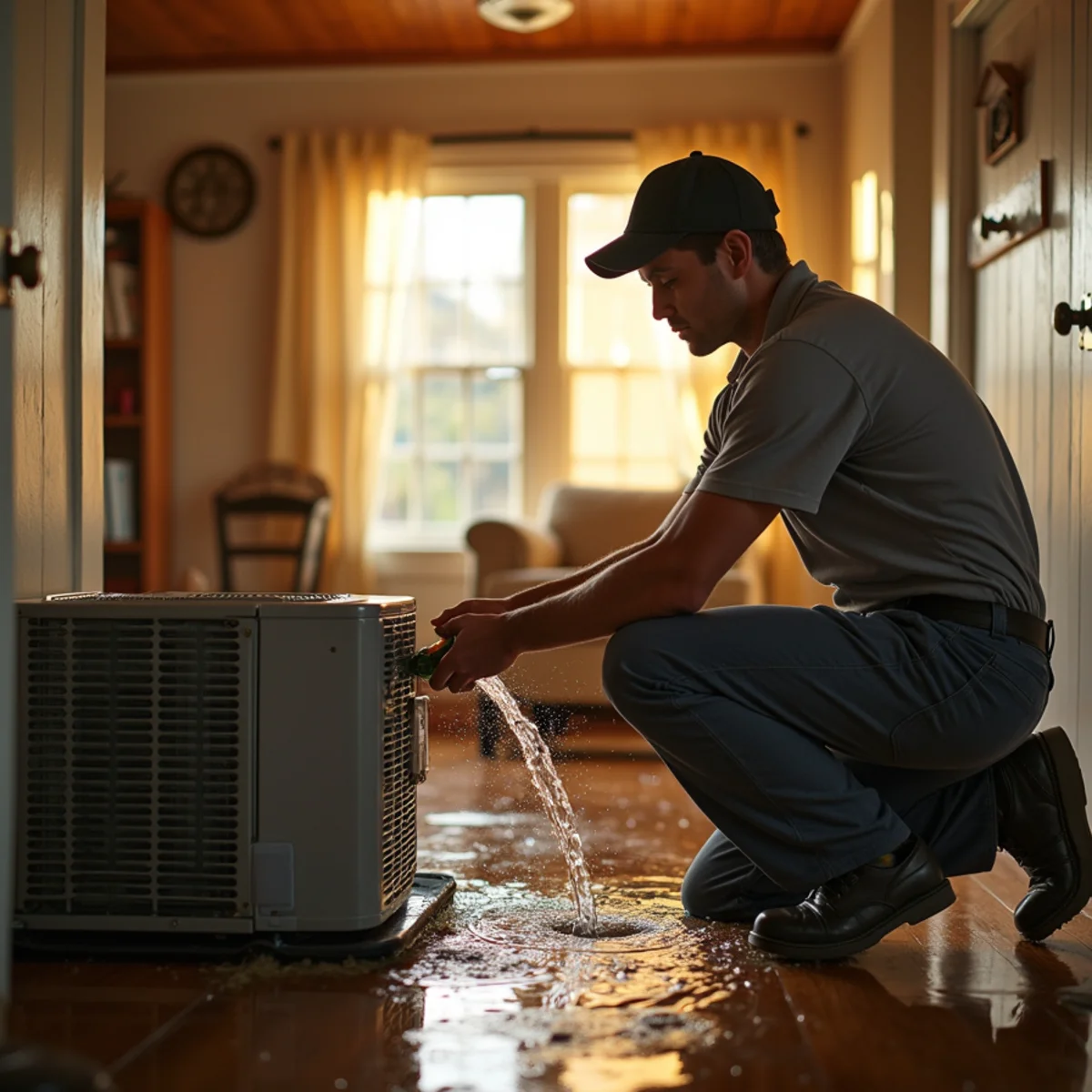
A Covington air conditioner does double duty. It cools the house, but in our 70-plus percent summer humidity it also wrings gallons of moisture out of the air every single day. That water is supposed to run out through a drain line. When it shows up on your floor, your ceiling, or inside the closet instead, something in that path has failed.
Sometimes a small puddle is a minor clog you can live with until morning. Other times, water pouring out of an attic air handler is soaking your drywall and insulation right now. Knowing the difference saves you both money and a mold problem.
Here is how to read the leak, what is likely causing it, and when to treat it as an emergency.
Why AC units leak so much in Covington
The more humid the air, the more condensate your system produces. On a muggy Northshore afternoon, a running AC can pull several gallons of water off the coil, all of which is supposed to drain safely away.
That heavy moisture load is also why our drain lines clog so often — the constant damp is a perfect home for the algae and slime that block the pipe.
The usual causes, from minor to serious
Most indoor leaks trace back to a handful of causes. A clogged condensate drain is the most common by far in our climate.
- Clogged condensate drain line — algae blocks the pipe and the pan overflows
- A cracked or rusted-through drain pan
- A frozen coil that thaws and dumps water all at once
- A disconnected or improperly sloped drain line
- A failed condensate pump on units that pump water uphill
When it is an emergency
Treat it as an emergency when the water is actively damaging your home or the system is above living space. An attic air handler over a bedroom can drop water through the ceiling for hours and ruin drywall, insulation, and anything below.
Given the EPA's 24 to 48 hour window before mold takes hold, a steady indoor leak in our humidity is not something to leave until next week.
- Water dripping through the ceiling from an attic unit
- A steady flow, not just a small puddle
- Water reaching outlets, wiring, or the electrical panel
- Any leak paired with a musty smell — mold may already be starting
What to do right now
First, turn the system OFF at the thermostat to stop producing more condensate. Then put down towels or a bucket and mop up standing water so it stops spreading.
If you are handy and the cause is an obvious clog, you can try clearing the drain, but do not force air or chemicals into a line you cannot see into. Frozen coil? Turn it off and let it thaw before doing anything else.
- Switch the AC OFF to stop the water at the source
- Contain and dry standing water to protect floors and drywall
- Do not keep running a frozen or overflowing system
- Note whether the water is clean condensate or something dirtier
Stop the repeat leaks
A one-time drain clearing is a fix; keeping the line clear is the real solution. In Covington's humidity, regular maintenance that flushes the condensate line and checks the pan and float switch heads off most emergency leaks before they start.
Homes fighting chronic moisture also benefit from whole-home dehumidification, which lightens the load on the AC and cuts the condensate it has to shed.
Call for same-day help
If water is coming through the ceiling or the leak will not stop, do not wait it out in our climate — mold moves fast. We provide same-day service across St. Tammany Parish and can clear drains, repair pans, and check the float switch that should have caught it.
Call HVAC Covington LA at (327) 210-5999 and we will stop the leak and help you keep it from coming back.
Why Covington's Humidity Turns a Small Drip Into Ceiling Damage Fast
Your air handler pulls gallons of moisture out of Northshore air every single day in summer, and all of it is supposed to run out a condensate line to the exterior. When that PVC line clogs with the algae and biofilm that thrive in our humidity, the water has nowhere to go but the emergency pan and eventually your ceiling. In a Covington attic that can hit 130 degrees, drywall stays wet, and mold colonies establish within 24 to 48 hours, which is far faster than homeowners in drier climates expect.
The failure point most people miss is the safety float switch. A properly installed system has a switch in the primary or secondary pan that cuts the AC off when water rises, so a clogged drain shows up as a cooling outage rather than a flood. If your unit keeps running while it leaks, either that switch was never installed or it has failed, and that is worth an urgent service call before the next storm dumps more humidity into the house.
Emergency vs. Wait-Till-Morning: How to Tell the Difference
Not every AC leak is a 2 a.m. crisis, but a few signs mean you should shut the system down and call right away.
- Active dripping through the ceiling or a spreading brown stain means shut it off now
- Water pooling around the indoor furnace or air handler base risks the control board and blower motor
- A frozen evaporator coil that's now melting will keep producing water until you kill power and let it thaw
- A gurgling or overflowing condensate drain outside signals a full clog needing prompt clearing
- If the leak stops when you turn the system off and the pan is only damp, a morning appointment is fine
- Any musty smell paired with visible moisture warrants same-day attention to head off mold
Frequently Asked Questions
It can be. A small puddle from a slow drain clog may wait until morning, but water pouring through a ceiling from an attic unit is damaging your home right now and should be treated as an emergency, especially given how fast mold starts in Covington's humidity.
Services Mentioned
Areas We Serve
Related Reading
Troubleshooting
Musty Smell When the AC Kicks On: Duct Mold in Bayou-Country Homes
That musty odor the moment the AC turns on usually traces back to mold in your coil or ducts. Here is why bayou-country homes are prone to it and how to clear it.
Troubleshooting
Why Is My AC Running Constantly in Covington's Humidity?
If your AC never seems to shut off during a Covington summer, humidity is usually part of the story. Here is how to tell a normal long run from a real problem.
Emergency
24/7 HVAC Help in Covington: What Happens When You Call After Hours
Ever wonder what actually happens when you call an HVAC company at 2 a.m.? Here is how after-hours dispatch works in Covington and how to make the call go smoothly.