
Troubleshooting · 8 min read
Why Is My AC Running Constantly in Covington's Humidity?
By HVAC Covington LA · Published June 11, 2025 · Updated July 28, 2025
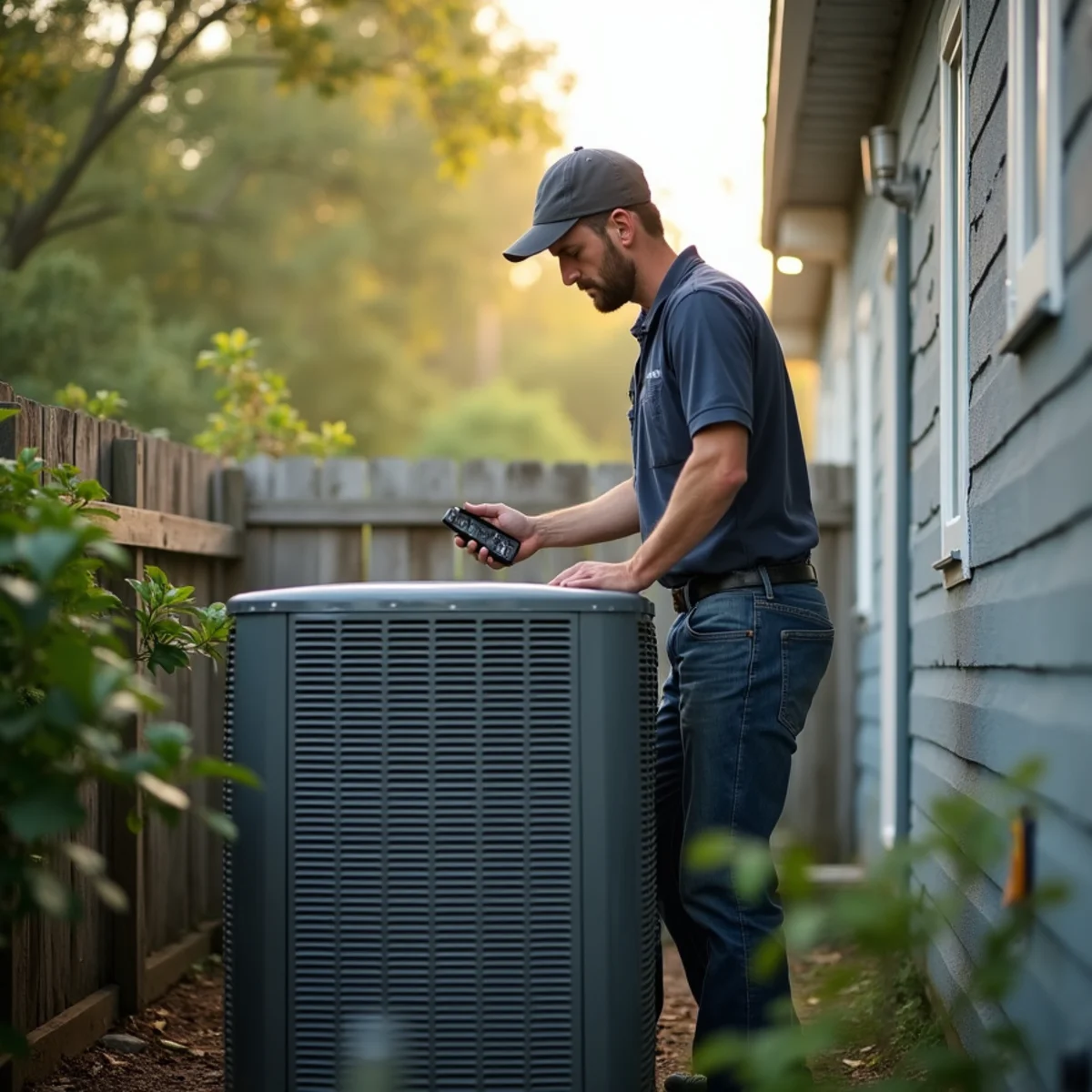
By late July in Covington, it is normal for an air conditioner to run long stretches without shutting off. When the outdoor air sits near 92 degrees with 70-plus percent humidity coming off the Bogue Falaya, your system is fighting both heat and moisture at the same time. A unit that runs a lot is not automatically broken.
But there is a line between a healthy long run and a system that literally never cycles off, and crossing that line usually means higher power bills, a house that still feels clammy, and a compressor working itself toward an early grave.
Here is how we tell the difference on service calls across St. Tammany Parish, and what each cause actually means for your home.
Long run time versus never shutting off
A properly sized system in our climate might run 15 to 20 minutes at a stretch, and on the hottest afternoons it may run almost continuously. That alone is not a fault. The real warning sign is when the house cannot reach the thermostat setpoint at all, or when the air coming from the vents is not noticeably cold.
If your thermostat is set at 74 and the house is stuck at 79 at 4 p.m. no matter how long the unit runs, that is a capacity or airflow problem worth diagnosing.
Humidity is half the workload
Your AC does two jobs at once: it removes heat and it wrings moisture out of the air. In a dry climate the second job is small. On the Northshore it is enormous. A big share of the runtime you are paying for is the system pulling water out of humid indoor air and draining it outside.
If your home feels cold but sticky, or you see condensation on windows and registers, the AC may be cooling faster than it is dehumidifying. That points toward an oversized system or a need for dedicated dehumidification rather than a repair.
Common mechanical causes of constant running
- Dirty condenser coil: pine pollen, grass clippings, and lake-air grime insulate the outdoor coil so it cannot dump heat.
- Low refrigerant from a leak: less refrigerant means less cooling per minute, so the system runs longer to keep up.
- Clogged air filter or blocked return: starved airflow drops capacity and freezes coils.
- Failing capacitor or aging compressor: the unit runs but no longer moves heat efficiently.
- Leaky or undersized ductwork in a hot attic bleeding cooled air before it reaches the rooms.
The oversized-unit trap
A lot of Covington homes were sold an air conditioner that is simply too big, on the theory that bigger cools faster. In our humidity that backfires. An oversized unit blasts the temperature down in a few minutes, satisfies the thermostat, and shuts off before it has run long enough to pull much moisture out of the air.
The result is a house that is cold and damp at the same time, with short bursts of runtime. If your problem is clamminess rather than heat, the fix is often better dehumidification or right-sizing at replacement, not a bigger unit.
What you can check before calling
Swap a dirty filter, make sure return and supply vents are open and unblocked, and gently rinse leaves and pollen off the outdoor unit with the power off. If the system still runs nonstop and the house will not cool, stop there.
Repeatedly cutting the breaker or adding refrigerant without finding a leak just masks the real issue. At that point a proper diagnosis pays for itself.
Runtime vs. Actual Cooling: What Constant Operation Signals
A properly sized Covington AC should run long, steady cycles on a humid August afternoon, and that is not a defect, it is how it wrings moisture out of the air. The problem is when the system runs continuously and the house still feels clammy or the thermostat never reaches setpoint. That points to a system fighting a load it cannot beat: a dirty condenser coil shedding less heat, low refrigerant reducing capacity, or duct leakage pulling humid attic air into the return.
There is a design nuance specific to our climate. An oversized unit short-cycles and leaves humidity behind, while a right-sized unit runs longer but dehumidifies better, so longer runtime can actually mean better comfort. Before assuming the AC is failing, check whether the house feels cool and dry despite the long cycles. If it is cool and dry, the system may be doing exactly what Covington humidity demands. If it runs constantly and stays humid, you have a capacity or airflow problem worth diagnosing.
What to Check Before Calling for Constant Runtime
Run through these before scheduling a diagnostic, since several causes are homeowner-fixable and cost nothing.
- Replace a clogged air filter, which chokes airflow and forces endless running.
- Clear grass, cottonwood, and pollen debris from the outdoor condenser fins.
- Confirm all supply registers and return grilles are open and unblocked by furniture.
- Check that the thermostat is set to auto, not on, so the fan is not running nonstop.
- Feel for warm attic air leaking around return ducts or a poorly sealed attic access.
- Note whether cooling weakens in late afternoon, a classic sign of low refrigerant or a dirty coil.
- Verify the setpoint is realistic, since asking for 68 degrees on a 96-degree day guarantees constant runtime.
Frequently Asked Questions
Long runtimes are normal on a 90-plus degree Covington afternoon and are actually good for dehumidification. It is only a concern if the house cannot reach the thermostat setting or the air is not cold.
Services Mentioned
Areas We Serve
Related Reading
Troubleshooting
AC Short-Cycling in St. Tammany Parish: Common Causes & Fixes
An AC that starts and stops every few minutes is short-cycling, and it wears out fast. Here are the common causes we find on St. Tammany service calls.
Climate & Storm
62 Inches of Rain a Year: How Covington's Wet Climate Attacks Your HVAC
Covington's wet, humid climate is one of the toughest in the country on HVAC equipment. Here is exactly how the moisture attacks your system and how to defend it.
Troubleshooting
Mold in Your Air Handler? Covington's Humidity Problem Explained
The dark, damp inside of an air handler is a perfect home for mold in Covington's climate. Here is why it grows, how to spot it, and what actually clears it.