
Troubleshooting · 8 min read
Mold in Your Air Handler? Covington's Humidity Problem Explained
By HVAC Covington LA · Published May 19, 2025 · Updated July 15, 2025
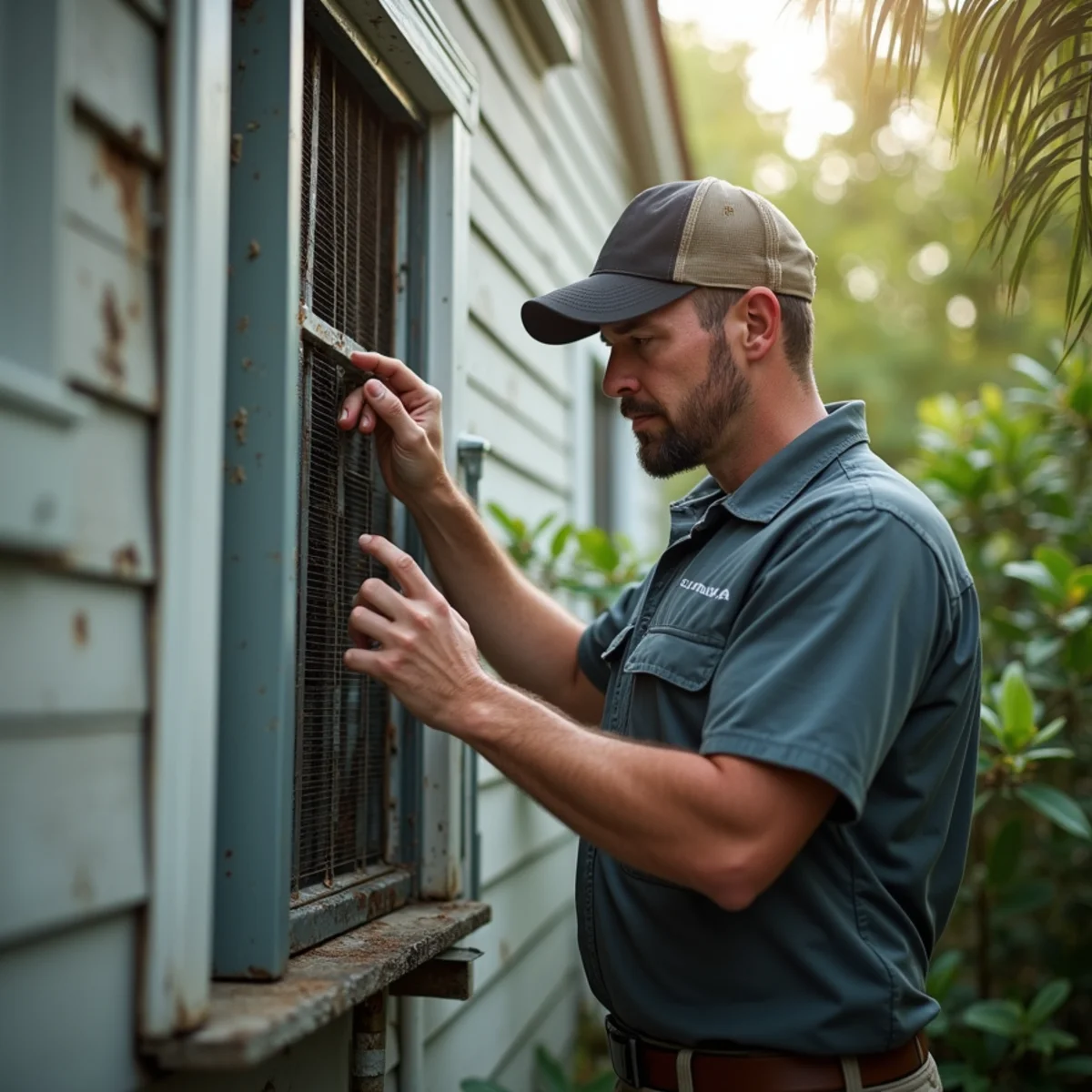
The inside of your air handler is dark, it stays wet every time the AC runs, and in Covington it sits in air that is humid nearly year round. That is essentially a greenhouse for mold. When homeowners in Lewisburg and around Covington call us about a musty smell or visible black speckling on the coil, we are rarely surprised.
Mold in an air handler is not just an odor problem. The blower pushes those spores through every duct in the house, so the equipment that is supposed to make your air comfortable ends up spreading contamination room to room.
This guide explains why it happens here specifically, how to know if you have it, and what a real fix looks like versus a spray-and-pray that comes right back.
Why air handlers grow mold on the Northshore
Mold needs three things: moisture, a food source, and time. Your evaporator coil delivers constant condensation, dust and pollen drawn through the return supply the food, and our long cooling season supplies the time. Covington's roughly 72 percent average humidity keeps the whole assembly damp far more of the year than in a drier climate.
Add an air handler tucked into a hot, humid attic or a closet with poor airflow, and condensation lingers instead of drying between cycles.
Signs you have mold, not just dust
- A musty, sour smell that gets stronger right when the blower kicks on
- Visible black, green, or gray growth on the coil, blower wheel, or inside the plenum
- Allergy-like symptoms that ease when you leave the house
- A drain pan holding standing water or a clogged condensate line
- Dark specks appearing around supply registers
The health side you should not ignore
Mold spores circulating through your ducts can trigger congestion, coughing, headaches, and worse for anyone with asthma or allergies. Kids, older family members, and anyone immune-compromised feel it first. If symptoms consistently improve when you are away from home, your HVAC system is a prime suspect.
This is why we treat air handler mold as an indoor air quality issue, not just a cleaning chore.
What a proper remediation involves
Wiping the visible coil face is not enough, because growth hides on the back of the coil, in the blower wheel, and in the drain pan. A thorough job means cleaning or replacing affected components, clearing and treating the condensate drain, and confirming the pan drains fully.
From there, we address the moisture that caused it: correcting an oversized or short-cycling system that never dries the coil, sealing return leaks that pull humid attic air, and often adding dehumidification so the equipment is not sitting wet 24/7.
- Deep-clean or replace the coil and blower wheel
- Flush and treat the condensate line and pan
- Fix the underlying humidity and airflow problem
- Consider UV treatment and better filtration to slow regrowth
Keeping it from coming back
Regular maintenance is the cheapest mold prevention there is. Changing filters on schedule, keeping the condensate drain clear, and having the coil inspected each spring stops small growth before it colonizes the system. Pairing that upkeep with controlled indoor humidity is what actually keeps an air handler clean between seasons in this climate.
Why Does Mold Keep Coming Back in Covington Air Handlers?
Covington's problem isn't that mold occasionally shows up in an air handler, it's that it thrives here by default. The evaporator coil is the coldest, wettest surface in your house, and when 90-degree, saturated Louisiana air hits it, condensation forms constantly. Dust and pollen ride that airstream, land on the wet coil and drain pan, and become food. Add a system that's oversized or short-cycling, so it cools fast but never runs long enough to dry the coil, and you've built a permanent greenhouse for mold inside your own equipment. Bleaching the visible growth does nothing about the conditions that grew it.
The recurring cases we see in St. Tammany almost always trace back to three fixable root causes: a clogged or improperly sloped condensate drain that leaves standing water in the pan, an oversized system that never dehumidifies, and a lack of airflow across a dirty coil. Fix the drainage and airflow, right-size the equipment or add a variable-speed blower, and pair it with UV coil treatment, and the mold stops returning. Just wiping the coil is treating the symptom while the cause keeps working.
How to Keep Mold Out of Your Air Handler Year-Round
These are the controls that actually break the cycle in our humidity, not one-time cleanups.
- Keep the condensate drain line clear and pitched, flush it monthly in cooling season
- Confirm the drain pan holds no standing water and the float switch works
- Run longer, gentler cooling cycles instead of short blasts to let the coil dry
- Maintain a fresh filter so dust doesn't feed growth on a wet coil
- Consider a UV-C light aimed at the coil to suppress biological growth
- Keep indoor humidity below 55 percent with proper equipment sizing or a dehumidifier
- Schedule a coil and blower inspection each spring before peak season
Frequently Asked Questions
Surface spray on the visible coil face rarely reaches the blower wheel, drain pan, and back of the coil where growth hides, and it does nothing about the moisture causing it. It usually returns within weeks without a full cleaning and a humidity fix.
Services Mentioned
Areas We Serve
Related Reading
Troubleshooting
Musty Smell When the AC Kicks On: Duct Mold in Bayou-Country Homes
That musty odor the moment the AC turns on usually traces back to mold in your coil or ducts. Here is why bayou-country homes are prone to it and how to clear it.
Climate & Storm
62 Inches of Rain a Year: How Covington's Wet Climate Attacks Your HVAC
Covington's wet, humid climate is one of the toughest in the country on HVAC equipment. Here is exactly how the moisture attacks your system and how to defend it.
Seasonal Maintenance
Dehumidifier Maintenance: Keeping Covington Homes Mold-Free Year-Round
A whole-home dehumidifier only protects your Covington home if it is maintained. Here is how to keep filters, coils, and drains clean so humidity and mold stay out.