
Troubleshooting · 8 min read
Sweating Ducts in the Crawlspace: A Covington High-Water-Table Problem
By HVAC Covington LA · Published June 25, 2025 · Updated August 5, 2025
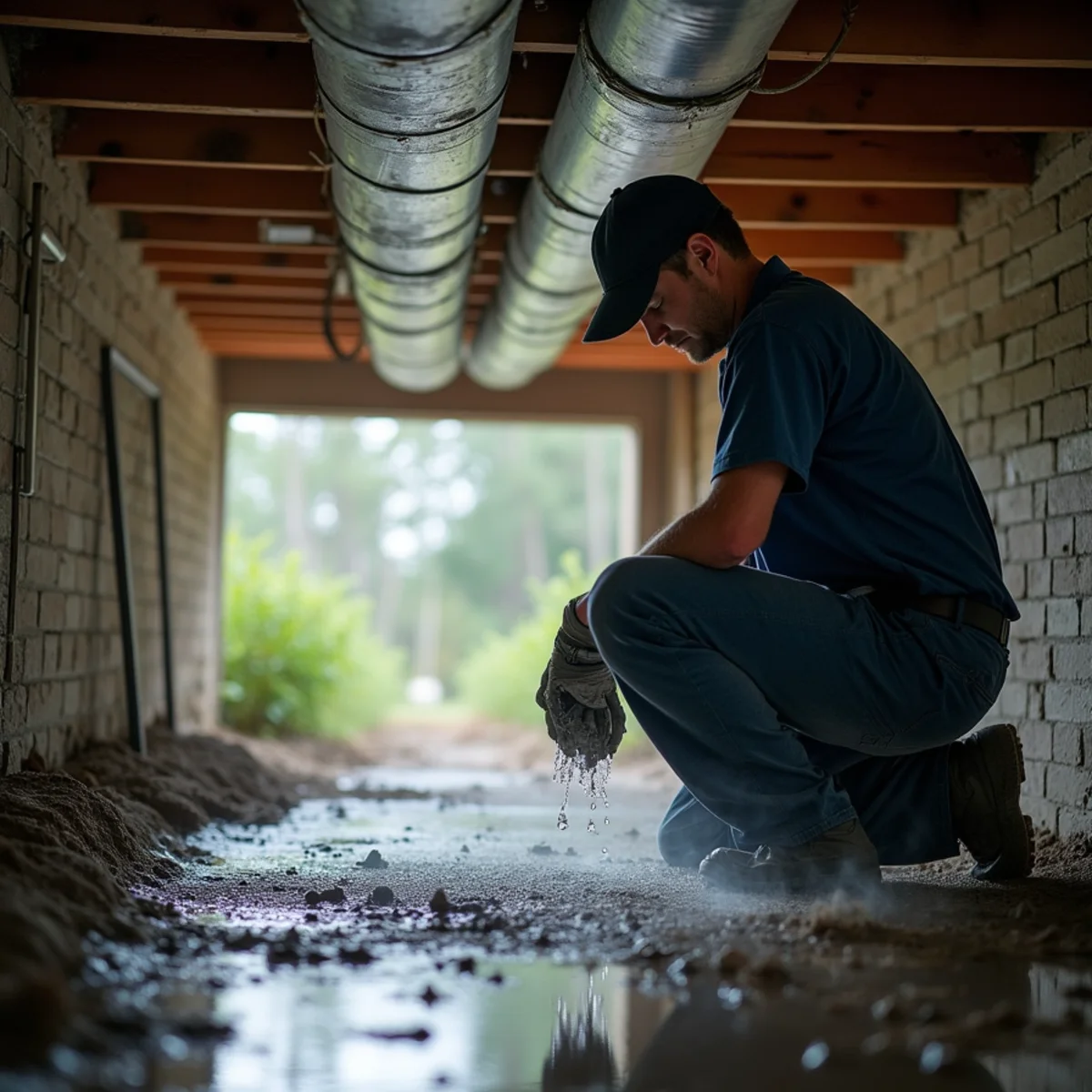
Crawl under a Covington home in July and put your hand on the ductwork, and you may find it wet, with water beading up and dripping onto the ground below. Homeowners in Madisonville and around Covington often discover it only when insulation sags, a musty smell creeps upstairs, or wood framing starts to show water stains.
Sweating ducts are not a plumbing leak. They are condensation, the same thing that happens on a cold glass of sweet tea on a humid afternoon. And our high water table and damp soil make the crawlspace a nearly perfect place for it to happen.
Left alone, it feeds mold, rots framing and subfloor, and ruins insulation. Here is why it happens under Northshore homes and what actually fixes it.
The physics: cold ducts, humid air
When cold supply air runs through a duct, the duct surface gets cold. If the air around that duct is warm and humid enough, moisture condenses on the cold surface, exactly like a sweating glass. In a Covington crawlspace, the air is very humid, so the ducts sweat.
The key number is the dew point. When the duct surface drops below the dew point of the surrounding crawlspace air, condensation is guaranteed. Our climate keeps that dew point high most of the year.
Why the water table makes it worse
Covington sits on high groundwater, and after our heavy rains the soil under a home stays saturated. That damp ground constantly releases moisture into the crawlspace, driving humidity way up. A wetter crawlspace means a higher dew point, which means the ducts sweat more.
This is why the problem is so common on the Northshore and less so in drier regions. You are fighting the ground itself, not just the weather.
Common contributing causes
- Missing, thin, or damaged duct insulation letting the surface get too cold
- Gaps and tears in the vapor barrier over the ground
- An open, vented crawlspace pulling in hot humid outdoor air
- Leaky supply ducts dumping cold air right onto nearby surfaces
- No dehumidification or air movement in the crawlspace
How the problem is actually fixed
A durable fix works on both sides of the equation: keep the duct surfaces warmer and make the crawlspace air drier. That usually means repairing or upgrading duct insulation and sealing duct leaks so cold air is not bleeding onto surfaces.
On the humidity side, a properly sealed ground vapor barrier, addressing crawlspace ventilation, and often dedicated dehumidification bring the dew point down so the ducts stop condensing. Fixing only the insulation without drying the space, or vice versa, tends to leave you with a lingering problem.
- Repair or replace damaged duct insulation
- Seal duct joints and leaks
- Install or repair a continuous ground vapor barrier
- Add dehumidification to lower crawlspace humidity
Do not wait it out
Standing condensation under a house is a mold and rot engine. The EPA guidance to dry wet materials within 24 to 48 hours applies here too, and a chronically wet crawlspace never gets that chance. If you are seeing dripping ducts, sagging insulation, or smelling must upstairs, get it assessed before the framing pays the price.
Why Do My Crawlspace Ducts Drip in a Covington Summer?
Sweating ducts are basic physics colliding with a Covington crawlspace. Cold supply air chills the metal or duct surface below the dew point of the humid air surrounding it, and that muggy crawlspace air, often near saturation thanks to our high water table, condenses on the cold duct exactly the way a glass of iced tea sweats on the porch. The water then drips onto the vapor barrier, the joists, and the subfloor. It's not a leak in the duct, it's moisture pulled out of the crawlspace air itself, and it will keep happening every day the humidity stays high, which in St. Tammany is most of the year.
The reason it matters is what that constant dripping does to the house. Persistent condensation rots joists and subflooring, saturates duct insulation until it sags and loses R-value, and feeds mold that then gets pulled into the return air. Homes with vented crawlspaces near the Bogue Falaya or Tchefuncte are the worst offenders because outside air brings even more moisture underneath. The durable fix isn't wrapping the ducts tighter and hoping, it's controlling the crawlspace moisture and sealing the ducts so cold air and humid air stop meeting on bare metal.
How to Stop Crawlspace Duct Sweating for Good
Attack the moisture and the cold surface together, doing only one rarely holds in our climate.
- Verify and upgrade duct insulation to a proper vapor-sealed wrap rated for humid environments
- Seal duct joints and the vapor barrier so cold air and humid air don't mix at the metal
- Install a continuous ground vapor barrier over the crawlspace soil
- Consider encapsulating the crawlspace and sealing foundation vents to cut incoming humidity
- Add a crawlspace dehumidifier to hold moisture below the dew point
- Check and clear condensate drainage so pooled water isn't adding to the humidity
- Have a technician confirm the ducts aren't oversized or over-cooling the space
Frequently Asked Questions
Usually not a plumbing leak. Sweating ducts are condensation, moisture from humid crawlspace air collecting on cold duct surfaces. The fix is to insulate the ducts better and dry out the crawlspace air, not to patch a pipe.
Services Mentioned
Areas We Serve
Related Reading
Seasonal Maintenance
Crawlspace Moisture Control: A Seasonal Checklist for Covington Homes
A high water table and constant humidity make Covington crawlspaces a moisture trap that attacks your ductwork. Here is a seasonal checklist to keep it dry.
Troubleshooting
Musty Smell When the AC Kicks On: Duct Mold in Bayou-Country Homes
That musty odor the moment the AC turns on usually traces back to mold in your coil or ducts. Here is why bayou-country homes are prone to it and how to clear it.
Climate & Storm
62 Inches of Rain a Year: How Covington's Wet Climate Attacks Your HVAC
Covington's wet, humid climate is one of the toughest in the country on HVAC equipment. Here is exactly how the moisture attacks your system and how to defend it.