
Troubleshooting · 7 min read
Refrigerant Leak or Just Low Freon? Diagnosis for Covington Homes
By HVAC Covington LA · Published March 27, 2025 · Updated July 2, 2025
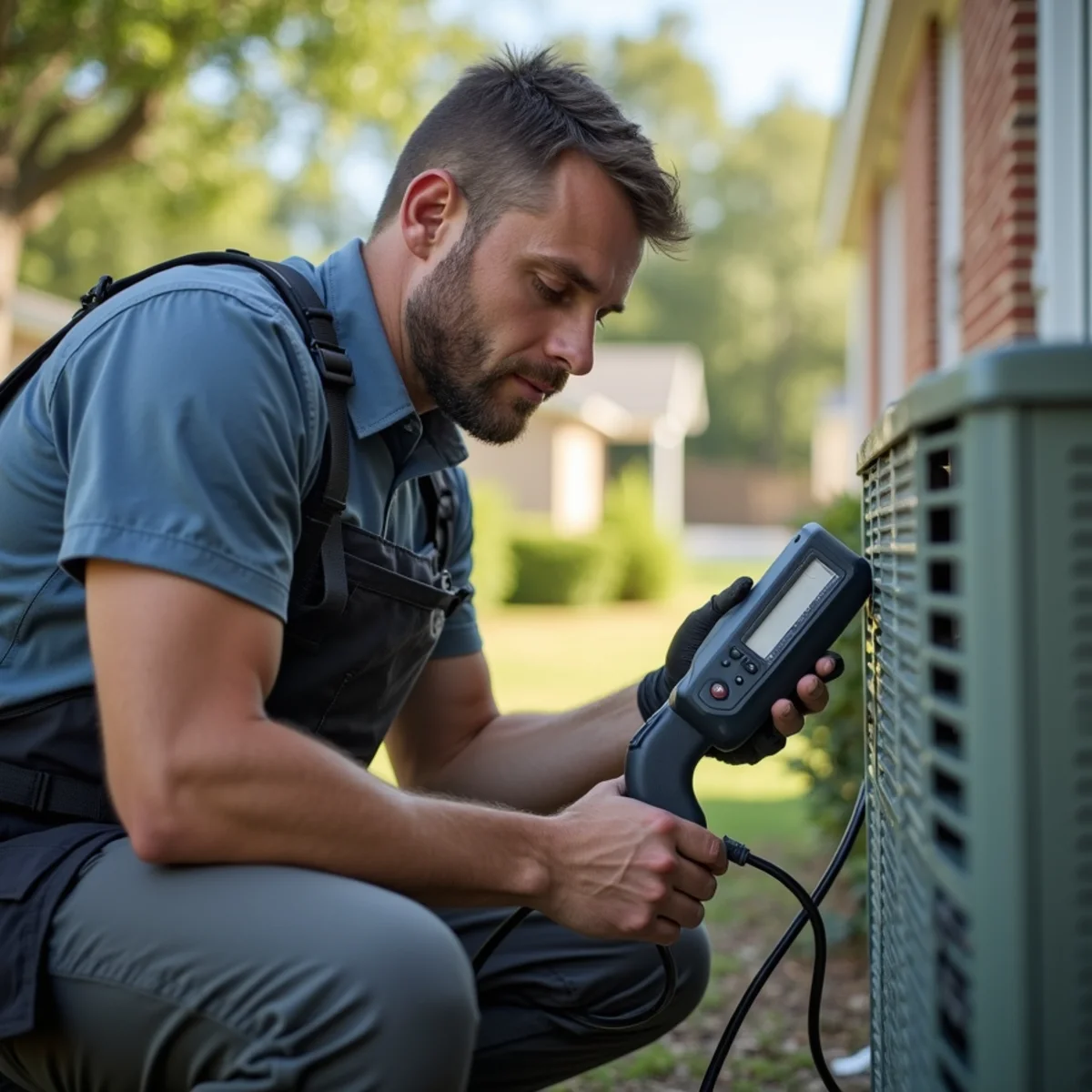
There is a myth we have to correct on a lot of service calls in Barkley Parc and around Covington: the idea that air conditioners slowly use up refrigerant over time, the way a car burns oil. They do not. An AC is a sealed system. If it is low on refrigerant, there is a leak somewhere, full stop.
That matters because the cheap fix, just adding refrigerant, treats the symptom and ignores the cause. You pay every summer for a recharge, the system runs poorly the whole time, and the refrigerant vents into the atmosphere.
This guide explains how a real refrigerant leak diagnosis works, so you know whether you are getting a lasting repair or an expensive top-off habit.
Why 'low Freon' always means a leak
Refrigerant circulates in a closed loop and is never consumed by normal operation. If the charge is low, it escaped, whether through a corroded coil, a loose fitting, a cracked line, or a factory defect. Covington's humid, salty, pollen-heavy air is especially hard on outdoor coils, which is a frequent leak point here.
So when someone says your system is 'a little low, we topped it off,' the real question is where it went. Without that answer, you will be back next year.
Symptoms that point to a leak
- Weak cooling and longer run times even though the unit is running
- Ice or frost on the refrigerant lines or the indoor coil
- A hissing or bubbling sound near the lines or coil
- Higher power bills as the system struggles for capacity
- Cooling that fades a little more each season
How a proper diagnosis is done
A thorough leak diagnosis is more than clipping on gauges. A technician confirms the charge is actually low, then hunts the leak with the right tools: an electronic leak detector, soap-bubble testing at fittings, and sometimes UV dye introduced into the system and traced with a UV light on a follow-up visit.
Common culprits in our area are corroded evaporator or condenser coils, worn Schrader valves, and vibration-loosened flare fittings. Pinpointing the exact spot is what separates a repair from a guess.
- Verify the charge is genuinely low
- Electronic detector sweep of coils and lines
- Bubble test on fittings and valves
- UV dye trace for slow, hidden leaks
Repair, then recharge, in that order
Once the leak is found, the fix might be tightening or replacing a fitting, replacing a valve, or replacing a leaking coil. Only after the leak is sealed does it make sense to evacuate the system and recharge it to the manufacturer's specified weight.
Charging by exact weight after a proper repair is very different from eyeballing a top-off. It restores full capacity and does not just delay the next failure.
When a top-off is defensible, and when to walk
Occasionally a small recharge is a reasonable stopgap to get a family through a brutal weekend before a scheduled coil replacement, and that is fine if it is disclosed as temporary. What you should refuse is a shop that recharges year after year and never offers to find the leak. Insist on a documented cause before approving refrigerant.
Low on Refrigerant Always Means a Leak, and Here's How We Find It
A sealed air conditioning system does not consume refrigerant the way a car burns gas. If your charge is low, there is a leak somewhere, full stop. Anyone who just tops off the refrigerant and leaves is selling you a temporary fix that will fail again, often within a season, while venting refrigerant into the atmosphere. In Covington homes we most often trace leaks to corroded evaporator coils, worn Schrader valve cores, and vibration-fatigued brazed joints on the line set.
Our diagnosis starts with an electronic leak detector and a bubble solution on suspect fittings, and for elusive leaks we introduce a UV dye or use nitrogen pressure testing to isolate the section. Salt-laden air drifting up from the coast and the acidic condensation our humidity produces both accelerate coil corrosion here, which is why formicary corrosion pinhole leaks in evaporator coils are something we see regularly on the Northshore. Pinpointing the exact leak lets us quote an honest repair-versus-replace decision instead of guessing.
Warning Signs Your Covington AC Has a Refrigerant Leak
Several symptoms point to low charge; the more you're seeing, the more likely a leak is the cause.
- Cooling that's weak or slow even with a clean filter and clear condenser
- Ice or frost forming on the copper suction line or the indoor coil
- A hissing or bubbling sound near the indoor unit or line set
- Higher-than-usual electric bills as the system runs longer to reach setpoint
- Warm air from the vents during the hottest part of a Northshore afternoon
- The system that cooled fine last summer now struggling as a slow leak worsened over winter
- Humidity indoors staying high because the weakened system can't dehumidify
Frequently Asked Questions
No. An air conditioner is a sealed system and never consumes refrigerant during normal operation. If it is low, there is a leak, and the right response is to find and repair that leak, not simply add more refrigerant.
Services Mentioned
Areas We Serve
Related Reading
Troubleshooting
Why Is My AC Running Constantly in Covington's Humidity?
If your AC never seems to shut off during a Covington summer, humidity is usually part of the story. Here is how to tell a normal long run from a real problem.
Troubleshooting
AC Short-Cycling in St. Tammany Parish: Common Causes & Fixes
An AC that starts and stops every few minutes is short-cycling, and it wears out fast. Here are the common causes we find on St. Tammany service calls.
Cost & Financing
How Much Does AC Repair Cost in Covington, LA? (2025 Price Guide)
A transparent look at 2025 AC repair costs in Covington — diagnostic fees, common repairs, emergency pricing, and what changes the number.